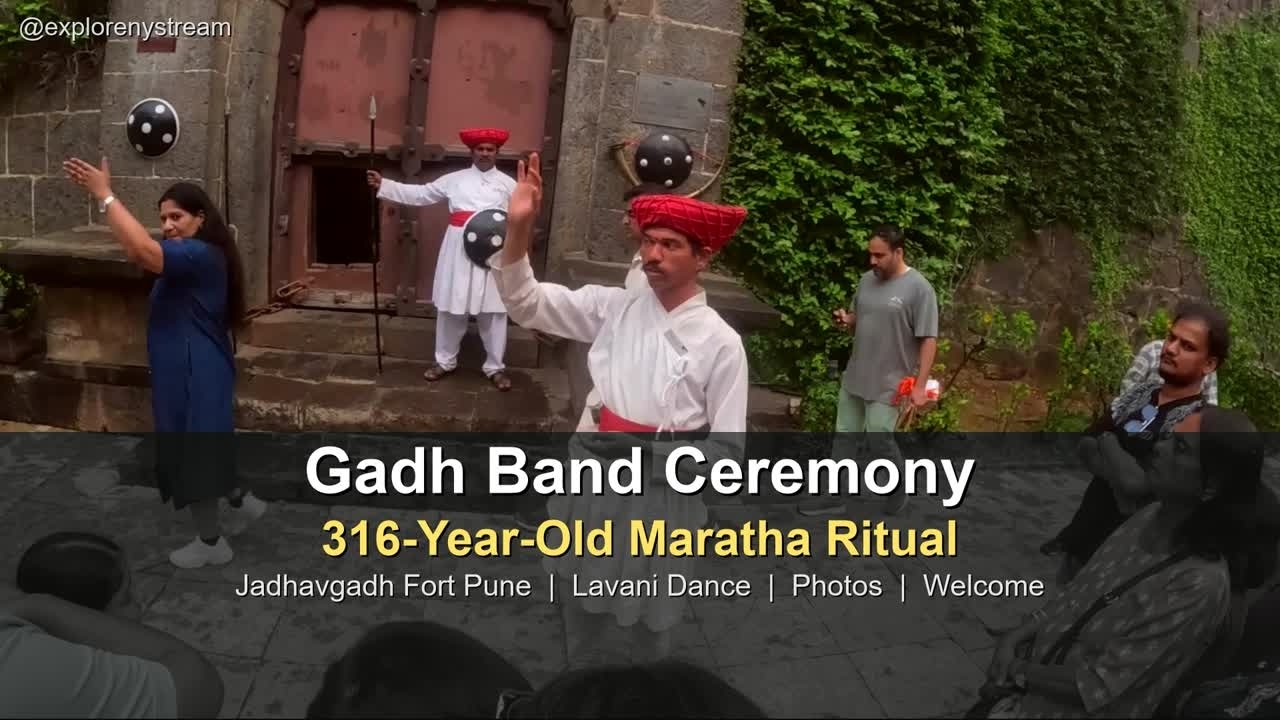
Gadh Band Ceremony at Jadhavgadh Fort | 316-Year-Old Maratha Ritual | Pune 2026
August 28, 2026 — ny_wk
As an Amazon Associate I earn from qualifying purchases.
As an Amazon Associate I earn from qualifying purchases.
As an Amazon Associate I earn from qualifying purchases.
As an Amazon Associate I earn from qualifying purchases.
As an Amazon Associate I earn from qualifying purchases.
As an Amazon Associate I earn from qualifying purchases.
As an Amazon Associate I earn from qualifying purchases.
As an Amazon Associate I earn from qualifying purchases.
As an Amazon Associate I earn from qualifying purchases.
As an Amazon Associate I earn from qualifying purchases.
As an Amazon Associate I earn from qualifying purchases.
As an Amazon Associate I earn from qualifying purchases.
As an Amazon Associate I earn from qualifying purchases.
As an Amazon Associate I earn from qualifying purchases.
As an Amazon Associate I earn from qualifying purchases.
As an Amazon Associate I earn from qualifying purchases.
As an Amazon Associate I earn from qualifying purchases.
As an Amazon Associate I earn from qualifying purchases.
As an Amazon Associate I earn from qualifying purchases.
As an Amazon Associate I earn from qualifying purchases.
As an Amazon Associate I earn from qualifying purchases.
As an Amazon Associate I earn from qualifying purchases.
As an Amazon Associate I earn from qualifying purchases.
As an Amazon Associate I earn from qualifying purchases.
🛒 Recommended gear on AmazonDisclosure: some links above are affiliate links — if you buy through them I may earn a small commission at no extra cost to you. Thanks for supporting the channel!
As an Amazon Associate I earn from qualifying purchases.
As an Amazon Associate I earn from qualifying purchases.
As an Amazon Associate I earn from qualifying purchases.
Watch a 316-year-old Maratha fort ritual come alive at sunset — the Gadh Band ceremony at Jadhavgadh Fort near Saswad, Pune, is one of the most electrifying heritage experiences you can have in Maharashtra in 2026. Thundering dhols, blazing torches, soldiers in period armour marching to close the great iron gates — I stood there on August 22nd with goosebumps and genuinely could not believe this was real.
I am a Pune local through and through. My weekends usually revolve around volleyball matches at Shreewoods Society in Dhanori. But when a crew of us decided to swap the court for a day trip to Jadhavgadh, I had absolutely no idea what was waiting for us. I expected a pretty old fort. I did not expect to feel like I had walked straight into the Maratha Empire.
What Is the Gadh Band Ceremony — and Why Does It Still Matter?
The Gadh Band — literally "fort closing" in Marathi — is the traditional evening ritual of shutting the gates of a Maratha stronghold at sunset. In the era when these forts were active military and administrative centres, gate-closing was serious business. It marked the end of the day's commerce, the sealing of the fort against intruders, and the handover of the premises to the night watch. Every fort in the Maratha Empire that had any strategic importance performed this ceremony with military precision: the beating of specific drum patterns, the march of the guard in full uniform, the passing of the keys, and the physical closing and bolting of the main gate.
What makes Jadhavgadh's Gadh Band unique is that it has never truly stopped. Even as the fort transitioned from a working Maratha stronghold to a private heritage property to — today — one of Pune's most celebrated heritage resort destinations, the family custodians kept the ceremony alive. When you stand in the courtyard as the sun dips behind the Sahyadri ridgeline and the dhol-tasha ensemble starts its ceremonial beat, you are watching something that has happened on this hilltop every evening for more than three centuries. That is not a re-enactment. That is living history.
The ceremony we witnessed included the ceremonial guard march in authentic Peshwa-era soldier dress — saffron turbans, chain mail details, long spears — a torch procession, and the dramatic closing of the heavy wooden and iron gates accompanied by a specific sequence of drum rolls. After the gates were sealed, a Lavani dance performance filled the courtyard with colour and sound. Lavani, the traditional folk-dance-and-music form of Maharashtra, historically performed at Maratha courts for royalty, felt completely at home in this setting. It was not a tourist add-on. It was the logical continuation of an evening that had already rewound three centuries.
The History of Jadhavgadh Fort: Shahu Maharaj, the Sardar, and 1707
To understand why Jadhavgadh exists, you need to understand one of the pivotal turning points in Maratha history. When Sambhaji Maharaj, the son of Chhatrapati Shivaji Maharaj, was captured and executed by Aurangzeb's forces in 1689, it sent shockwaves through the Maratha confederacy. His son, Shahu Maharaj, was taken captive as a boy and spent nearly two decades in Mughal custody before being released in 1707 — ironically, as a political manoeuvre by the Mughals who hoped a freed Shahu would fracture Maratha unity by contesting power with his aunt, Tarabai, who held the Kolhapur throne.
What actually happened was different. Shahu Maharaj established his court at Satara and began drawing the most capable chieftains of the Deccan into his service. Among those who came forward was Sardar Pilajirao Jadhavrao — a military leader whose courage in battle and loyalty to the Satara throne caught the king's eye immediately. Shahu Maharaj rewarded him generously: a jagir (land grant) covering the villages around Saswad, including the village of Jadhavwadi, which happened to be Pilajirao's own ancestral home.
Pilajirao was a practical man with a strategic mind. He recognised that sitting on a high ridge overlooking Saswad — Shahu Maharaj's own city — gave him a natural vantage point. The hill was solid rock, which meant any structure built from it would be extraordinarily durable. He decided to build a fort. And rather than importing stone from elsewhere, his builders did something elegant: they quarried the hill itself. The excavation that carved the fort's foundations and terraces produced the very stone that went into its walls, bastions, and chambers. The mountain became the fort. The process was entirely self-referential — dig the earth, build with what you find.
The year was 1707. As of 2026, that makes Jadhavgadh approximately 316-319 years old — and most of what you see in the original fort complex dates to that first construction era. The bastions, the inner courtyards, the storage vaults, the watchtowers: all cut from the same stone that once formed the hill.
The Ganesha of the Lake — A Discovery Inside the Excavation
During the digging of the fort's foundations and its terraces, the workers needed water. The site was high ground — no natural stream ran through it. Pilajirao's engineers decided to excavate a large step-well and lake within the fort compound to capture rainwater. As the digging progressed deeper into the rock, workers made an unexpected discovery: buried in the earth, they found a stone idol. It was a depiction of Lord Ganesha.
For Maratha soldiers and builders of the 18th century, finding a Ganesha idol in the earth during construction was not just a coincidence — it was a sign. Ganesha is the remover of obstacles, the lord of new beginnings, invoked before any major undertaking. Discovering his idol buried at the very spot where their fort would stand was interpreted as divine sanction for the project. The idol was carefully retrieved, consecrated, and installed in a shrine within the fort complex, where it continues to be worshipped today. The lake was completed and remains a landmark feature of the fort — the same body of water that visitors now walk past on their way to the heritage hotel wings.
Inside Jadhavgadh Heritage Resort: What the Fort Looks Like Today
Jadhavgadh is today managed by the Jadhavrao family's descendants — remarkably, the seventh and eighth generations of Pilajirao's lineage still maintain an active presence here. The transition from active military fort to heritage resort did not happen overnight, and the family was careful to preserve the original structures rather than demolish them for new construction. What you see when you arrive is genuinely layered: original 18th-century bastion walls, stone-carved corridors, and gateways coexisting with sensitively designed modern hotel rooms, a swimming pool, a spa, and dining facilities.
The fort's most historically significant accommodation is the Maharaja Suite — the room that once served as the private chamber of the fort's ruler. In Pilajirao's time, accessing this room required passing through five successive doorways, each guarded, each a security layer designed to make assassination or forced entry nearly impossible. The corridors between those doors would have been narrow and defendable. Today you arrive at the Maharaja Suite via a much more comfortable route — past the swimming pool, through a stone archway — but the original five-door vestibule structure is still visible.
Adjacent to the swimming pool is a large stone-lined well that predates the modern pool by centuries. This was the fort's primary water source — the well drawing from the same groundwater system as the lake excavated during construction. Even as the resort added the modern pool, the well was preserved. It is now a striking visual feature: ancient circular stonework sitting metres away from turquoise resort water, a casual collision of eras.
Activities Available During the Day
- Archery range — traditional bows on an open terrace with the Sahyadri range as your backdrop; genuinely fun even if you have never held a bow
- Zipline — runs from one of the fort terraces down across the hillside; long enough to give you a proper adrenaline hit
- Segway rides — on the lower courtyard; a slightly surreal experience against 300-year-old stone walls
- Heritage walks — guided tours through the original fort sections with commentary on Maratha history, the construction story, and the Jadhavrao family lineage
- Photography — the fort's stepped architecture and panoramic views of the Sahyadri foothills make it a serious landscape photography location at any time of day, but especially golden hour
We arrived early enough to do the archery and zipline before lunch, and spent the slow afternoon hours doing the heritage walk, which is where I first heard the full story of Pilajirao and the Ganesha idol. By the time evening came and the Gadh Band ceremony began, I felt like I had actually earned the right to witness it — we had spent the day learning what the place was before watching what it still does.
The Gadh Band Ceremony in Detail: What to Expect Minute by Minute
The ceremony begins roughly thirty to forty-five minutes before full dark. The first signal is the change in the dhol player's rhythm — a specific pattern that announces the gathering of the guard. Visitors are directed to the main courtyard in front of the principal gate.
The ceremonial guard assembles in a line. Each soldier is dressed in Peshwa-era military attire: dyed fabric in the colours historically associated with Maratha infantry, with turbans tied in the specific regional style of the Deccan. They carry long spears and shields. The torchbearers take their positions at the flanks. This is not a loose approximation of historical dress — the family has maintained records of what authentic ceremonial attire looked like, and the costumes reflect that research.
The drum sequence escalates in three distinct phases. The first phase announces the beginning of the ceremony and calls anyone still outside the gate to enter. The second phase is the march — the guard moves from the inner courtyard to the gate in a precise formation, with the lead torch-carrier at the front. The third and final phase is the gate-closing itself: the great doors are pushed closed, the iron bolts are thrown, and a single long sustained drum roll marks the sealing of the fort for the night. In the original tradition, the keys would then be ceremonially handed to the commanding officer for safekeeping until morning.
The silence that follows the gate-closing — the brief gap before the Lavani performers take the stage — is one of the most charged moments I have experienced at any cultural event in Pune. Everyone in the courtyard is processing the same thing: that this was real, that people did this every single night for centuries, that the stone walls around us absorbed three hundred years of this ritual before we showed up.
The Lavani performance that follows is energetic and joyful — a deliberate tonal shift from the gravity of the ceremony to the celebratory spirit of the Maratha court. Lavani is a high-energy dance form characterised by fast footwork, expressive hand gestures, and lyrics that historically ranged from romantic to devotional to satirical. Watching it performed in a lit fort courtyard, with the walls torchlit and the Sahyadri hills in the background, is a very different experience from watching it on a stage in a city auditorium. The space makes the performance.
Getting to Jadhavgadh Fort from Pune: Practical Information
Jadhavgadh Heritage Resort sits near Saswad village, approximately 30-35 kilometres southeast of central Pune on the Saswad-Jejuri road. By road from Pune, the drive typically takes 45-60 minutes depending on traffic through Hadapsar and Saswad town. The road narrows as you approach the fort and climbs steeply in the final kilometre — it is passable by standard cars but requires care, especially after rain when the surface can be slick.
The resort is open for day visits as well as overnight stays. For day visitors, the Gadh Band ceremony is the primary draw and requires an evening arrival — plan to be on-site no later than 4:00 PM to give yourself time for the heritage walk and activities before the ceremony begins. The ceremony itself runs roughly 30-45 minutes and is followed by the Lavani performance, so departure would typically be by 8:30-9:00 PM.
Overnight stays in the Maharaja Suite or the heritage rooms book up well in advance on weekends, particularly during October-March (the cooler, drier season when Sahyadri views are clearest). If you are going during monsoon — as we did in August — bring a light rain jacket. The fort's stone surfaces are dramatic in the mist, and the surrounding hillsides are intensely green in ways they simply are not in summer.
The fort is particularly popular with Pune school groups and corporate offsite teams, which means weekdays can sometimes have organised group energy that changes the atmosphere of the ceremony. For the most authentic and less crowded experience, a weekday visit in the shoulder season (September or early October) is ideal.
Key Takeaways
- Jadhavgadh Fort was built in 1707 by Sardar Pilajirao Jadhavrao under a land grant from Shahu Maharaj of the Satara throne — the fort's stone was quarried from the very hill it stands on.
- The Gadh Band ceremony is a living Maratha tradition, not a re-enactment — the sunset gate-closing ritual has continued here for over three centuries and is performed nightly at the heritage resort.
- A Ganesha idol was discovered during the fort's original construction excavations and has been worshipped on-site ever since — one of the fort's most compelling origin stories.
- The seventh and eighth generations of the Jadhavrao family still maintain the property and its traditions, making this an extraordinarily rare case of unbroken family custodianship of a 300-year-old heritage site.
- Day visitors should arrive by 4:00 PM to experience the full arc — heritage walk, activities, the Gadh Band ceremony, and the Lavani performance — before the evening ends.
Frequently Asked Questions
What is the Gadh Band ceremony at Jadhavgadh Fort?
The Gadh Band ceremony is a traditional Maratha fort gate-closing ritual performed every evening at Jadhavgadh Heritage Fort near Saswad, Pune. Dating back to approximately 1707 when the fort was built, it involves a ceremonial guard march in period Peshwa-era attire, dhol-tasha drumming, torch procession, and the formal bolting of the fort's main gates at sunset — followed by a Lavani folk dance performance in the courtyard.
Who built Jadhavgadh Fort and when?
Sardar Pilajirao Jadhavrao built Jadhavgadh Fort in 1707 under a land grant from Chhatrapati Shahu Maharaj of the Satara Maratha throne. The fort was constructed using stone quarried directly from the hill it stands on — a practical and self-contained construction method that made the structure exceptionally durable. The Jadhavrao family's descendants, now in the seventh and eighth generations, continue to manage the property as a heritage resort.
How do I visit Jadhavgadh Heritage Resort from Pune?
Jadhavgadh Heritage Resort is located near Saswad village, approximately 30-35 km southeast of Pune on the Saswad-Jejuri road. The drive takes 45-60 minutes from central Pune. The resort accepts day visitors as well as overnight guests. To witness the Gadh Band evening ceremony, arrive by 4:00 PM. Advance booking is strongly recommended for weekends and the October-March peak heritage travel season.
Is Jadhavgadh worth visiting for a day trip from Pune?
Absolutely — Jadhavgadh is one of the most complete heritage day-trip experiences near Pune. A full day covers archery, zipline, a Segway ride, a guided heritage walk through the original Maratha-era fort sections, and the evening Gadh Band ceremony with Lavani performance. The combination of authentic 316-year-old architecture, a living cultural ritual, and modern resort amenities makes it suitable for history enthusiasts, families, and photography lovers alike.
If any of this has made you want to see the Gadh Band ceremony with your own eyes — the drums, the torchlight, the gates swinging shut on three centuries of history — I filmed the whole day. Watch the full video, Gadh Band Ceremony at Jadhavgadh Fort | 316-Year-Old Maratha Ritual | Pune 2026, on @explorenystream. The timestamp at 6:08 is where the gate-closing ritual begins — but honestly, watch from the start. The dhol welcome at the gates in the opening minute sets the tone for everything that follows.
Subscribe to @explorenystream for more Pune heritage visits, travel across Maharashtra, and our regular volleyball content from Shreewoods Society. Every video is shot on location, no scripts, no green screens — just Pune, the places around it, and whatever happens when we show up with a camera.