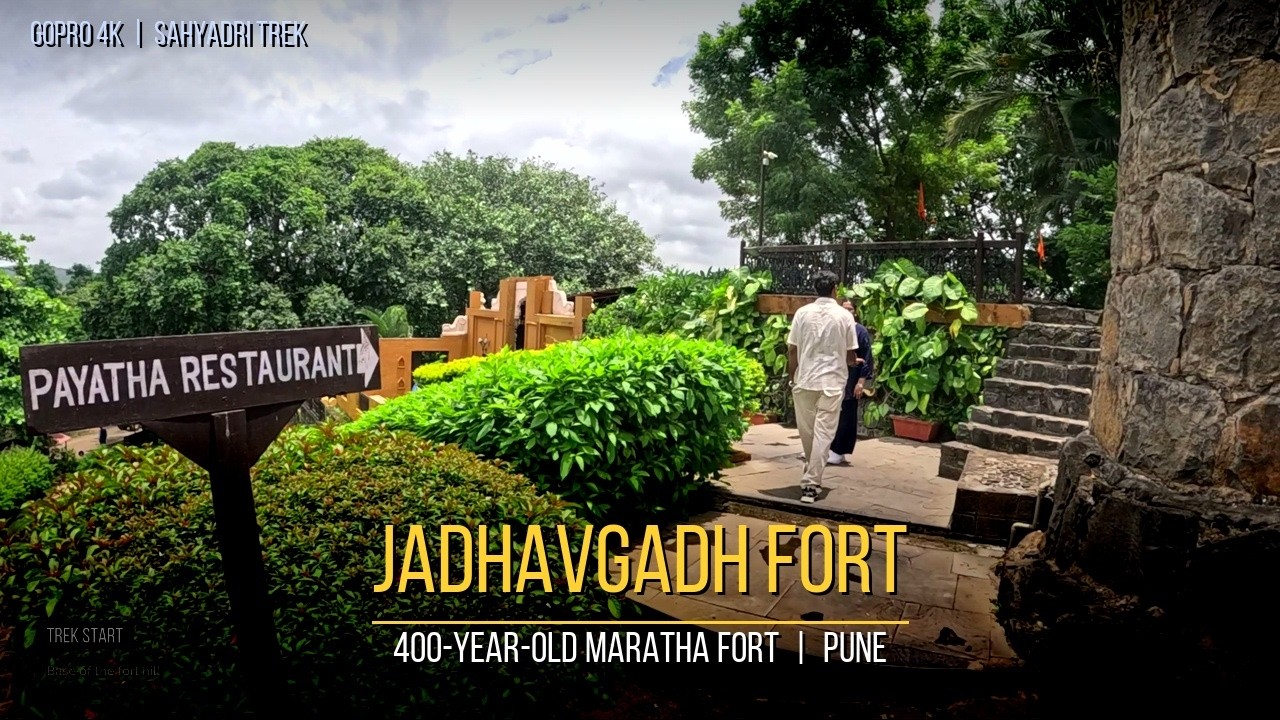
Jadhavgadh Fort Trek | 316-Year-Old Maratha Fort | Pune | GoPro 4K
August 28, 2026 — ny_wk
As an Amazon Associate I earn from qualifying purchases.
As an Amazon Associate I earn from qualifying purchases.
As an Amazon Associate I earn from qualifying purchases.
As an Amazon Associate I earn from qualifying purchases.
As an Amazon Associate I earn from qualifying purchases.
As an Amazon Associate I earn from qualifying purchases.
As an Amazon Associate I earn from qualifying purchases.
As an Amazon Associate I earn from qualifying purchases.
As an Amazon Associate I earn from qualifying purchases.
As an Amazon Associate I earn from qualifying purchases.
As an Amazon Associate I earn from qualifying purchases.
As an Amazon Associate I earn from qualifying purchases.
As an Amazon Associate I earn from qualifying purchases.
As an Amazon Associate I earn from qualifying purchases.
As an Amazon Associate I earn from qualifying purchases.
As an Amazon Associate I earn from qualifying purchases.
As an Amazon Associate I earn from qualifying purchases.
As an Amazon Associate I earn from qualifying purchases.
As an Amazon Associate I earn from qualifying purchases.
As an Amazon Associate I earn from qualifying purchases.
As an Amazon Associate I earn from qualifying purchases.
As an Amazon Associate I earn from qualifying purchases.
As an Amazon Associate I earn from qualifying purchases.
As an Amazon Associate I earn from qualifying purchases.
As an Amazon Associate I earn from qualifying purchases.
As an Amazon Associate I earn from qualifying purchases.
🛒 Recommended gear on AmazonDisclosure: some links above are affiliate links — if you buy through them I may earn a small commission at no extra cost to you. Thanks for supporting the channel!
As an Amazon Associate I earn from qualifying purchases.
As an Amazon Associate I earn from qualifying purchases.
As an Amazon Associate I earn from qualifying purchases.
Trek the 316-year-old Jadhavgadh Fort near Pune and you'll understand in about forty steps why the Marathas were never easy to dislodge from these hills. Sitting at roughly 900 metres in the Sahyadri range of the Western Ghats, Jadhavgadh Fort is a monsoon-green, historically loaded, completely free half-day adventure that most Punekars have somehow never done — and that needs to change immediately.
I drive past the Pune–Solapur highway a lot for volleyball tournaments out in Dhanori and beyond, and a friend once pointed at a ridgeline and said, "That's Jadhavgadh up there — it's insane, you should go." That was last monsoon. This July I finally went, GoPro strapped to my chest, fully convinced it would be a casual stroll. It was not a casual stroll. It was one of the best mornings I have spent anywhere near this city, and I'm already planning to go back in November when the sky turns clear and the views stretch all the way to the plains.
What Is Jadhavgadh Fort? The History Behind the Stone
Before you lace up your shoes, it's worth knowing what you're actually climbing toward, because this fort carries serious historical weight. Jadhavgadh was built by the Jadhav clan — the same family that forms the maternal ancestry of Chhatrapati Shivaji Maharaj. Jijabai, Shivaji's mother, came from the Jadhav lineage, which means this fort is tied directly to the founding bloodline of the Maratha Empire. That is not a minor footnote. That is the reason the stones here feel like they matter.
The fort dates to the 17th century, though its strategic position on a Sahyadri spur suggests the site was militarily valuable long before anyone formalized a structure there. At its peak, it served as a lookout post and garrison for the Maratha military network — part of the remarkable system of hill forts that allowed a relatively small force to project power across a vast and difficult landscape. The Marathas didn't hold this terrain by accident. They built for permanence, for sight lines, and for water storage — and the fort's construction reflects all three.
Today, the lower portion of the property has been converted into a heritage hotel — think stone courtyards, colonial-meets-Maratha architecture, the kind of place that charges a lot for a weekend stay and earns it. But the actual fort ramparts, bastions, water cisterns, and the ancient Shiva temple higher up remain accessible, still standing, still belonging to anyone willing to make the climb on foot.
The geological backdrop is equally dramatic. The Sahyadri range here is formed from Deccan Trap basalt — volcanic rock laid down approximately 65 million years ago when one of the largest volcanic events in Earth's history poured lava across what is now the Deccan Plateau. That dark, hard rock you'll be gripping on the steeper sections? It predates the dinosaurs' extinction. You are literally climbing a remnant of a planetary catastrophe, and the Maratha builders chose it because it was virtually impregnable.
Getting to Jadhavgadh Fort from Pune — The Drive from Dhanori
I started the morning from Dhanori — the area near Pune airport where I play most of my volleyball on weekends. From there, Jadhavgadh is roughly an hour's drive. The route takes you east and then southeast out of Pune's urban sprawl and into the Pune district hinterland. The last stretch is a winding climb through scrub and farming villages, and you'll feel the city receding as the road narrows and the hillsides crowd in.
There is no elaborate ticketing infrastructure waiting for you at the base. No entry fee, no compulsory guide, no tourist reception centre. You park, you find the trailhead — a narrow path that pushes into the forest with minimal ceremony — and you start walking. For anyone tired of over-managed trekking "experiences" with guardrails and loudspeakers, this is deeply refreshing.
A few practical notes for the drive:
- The heritage hotel signage will appear before the fort trailhead — don't mistake the hotel entrance for the trekking access point. The actual trail continues further up.
- Early morning start is strongly recommended in monsoon. By 10 AM the heat and humidity build fast even at elevation, and the path can be busy on weekends.
- Fuel up in Pune — there are no petrol stations in the immediate area of the fort.
- Google Maps gets you close but the final 1–2 km may require asking a local for the exact trail entry. Most people in the area know it.
The Monsoon Trek: What the Trail Actually Feels Like in July
Here's the thing nobody tells you before a Sahyadri monsoon trek: the forest doesn't just look different in July — it feels alive in a way that's almost overwhelming. The moment I stepped off the road and onto the dirt trail, the air changed. It went cool and heavy with moisture, full of the smell of wet earth and crushed leaves. Birds I couldn't identify were loud in the canopy. Somewhere to my left, water was moving.
The trail starts relatively forgiving. A narrow but well-worn path through dense secondary forest, with enough tree cover that the morning sun barely reaches the ground. The mud is real — this isn't a paved route, and after any recent rainfall you will need shoes with actual grip. I was wearing my old Adidas running trainers and managed, but proper trekking shoes would have been smarter. The rocks hidden under the mud are the real hazard, not the mud itself.
The climb gets genuinely serious about halfway up. The elevation gain to the fort walls is approximately 200 metres, and the trail compresses most of that into the upper section. Here the forest thins out and gives way to exposed Deccan Trap basalt — smooth, dark, and slippery when wet. This is where I started to understand why the fort above was considered defensible. Anyone trying to move quickly up this slope under fire from above would have had a terrible time.
Take your time on the exposed rock section. Short steps, weight back, hands available for balance. I'm reasonably fit from playing volleyball three or four times a week, and I was still breathing hard by the time the first real viewpoint opened up. But that viewpoint — the plains below, the surrounding hills draped in cloud, the monsoon green covering every visible surface — erases all the effort immediately.
What I kept noticing on the climb was how complete the sensory experience was. The sound design of a Sahyadri forest in July is its own thing: insects in overlapping layers, a pair of hornbills cutting overhead, the distant sound of water over rock, and underneath it all, the hiss of rain on leaves from a shower that had passed an hour before. If you spend most of your days in Pune's traffic and concrete, this is the correction.
Inside Jadhavgadh Fort — What Survives After Four Centuries
The fort wall announces itself before the main gate does. You'll see the top of the dry-stone ramparts through the trees and feel the scale of what was built here before you actually reach it. The construction is massive — thick walls of fitted basalt blocks, no mortar, held together by the precision of the fitting and four hundred years of gravity. The fact that they're still standing is not surprising once you understand the quality of the original work. The Maratha builders were not improvising.
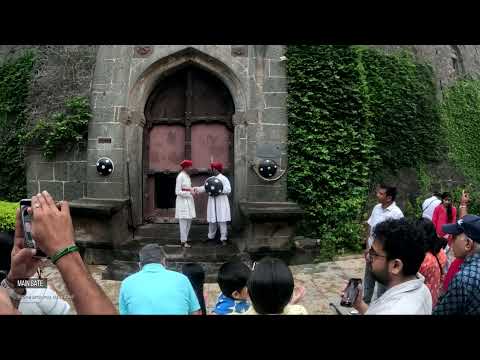
The main gate and stone archway are completely intact. Walking through it is a specific kind of moment — you step from a forest trail into the organized interior of a military installation that has been here since the 1600s, and the architecture makes the transition feel deliberate. The archway is tall enough that it clearly wasn't built just for foot traffic. It was built to impress, to signal to anyone entering that they were coming into something significant.
Inside the fort, the space is larger than the exterior suggests. Several things survive and are worth exploring carefully:
- Water cisterns carved into the basalt — these are engineering achievements. The Maratha builders cut collection channels and storage tanks directly into the rock to capture monsoon runoff. A fort under siege could sustain itself for months on stored rainwater. The cisterns still hold water today in July.
- Lookout posts facing every compass direction — the placement makes the strategic logic obvious. From the fort's highest points, you can see approaching movement from the plains in multiple directions simultaneously. Nothing moved in this part of the Sahyadri without the garrison knowing about it.
- An ancient Shiva temple — smaller than you'd expect, cut into the rock face, still carrying the weight of centuries of devotion. In July, there were fresh flowers at the base, left by someone who had made this climb specifically for puja. The temple predates the fort's military use and suggests the site was sacred before it was strategic.
- Outer bastions and wall sections — explore the perimeter where the trail allows; the varying states of preservation show you how the fort aged differently in different micro-climates.
The view from the highest accessible point is the reason this fort was built where it was, and the reason you come. The entire valley lays out below you — every hill, every village, every road you drove to get here. On a clear day the view stretches far into the plains; in monsoon the middle distance disappears into cloud and the effect is even more dramatic. The Western Ghats roll in every direction, soft and layered, the green deepened by the season into something almost unreal.
I stood up there for probably twenty minutes, which in my usual high-energy mode is an eternity. There's something about being in a place where soldiers once stood watch over a landscape that hasn't changed as much as you'd expect that slows your internal clock down. The valley below has roads and villages now, but the hills are the same hills, the clouds move the same way, and the basalt under your feet is exactly the basalt those soldiers stood on.
The Descent and What the Trek Costs You in Time and Energy
The descent always takes longer than the climb, even though gravity nominally helps. On wet basalt, going down requires more deliberate foot placement and more concentration than going up — you don't get to switch off. The mud on the lower trail is more churned on the way back (your own footprints plus any other trekkers who started after you), so the grip situation is slightly worse than the ascent.
Total time from base to summit and back, including a solid 20–25 minutes exploring the fort interior, was approximately three hours. That's a realistic half-day itinerary — you can leave Pune by 7 AM, be at the trailhead by 8, reach the fort by 9:30, spend time at the top, and be back in Pune for a late lunch. Or combine it with a visit to the heritage hotel's courtyard for coffee on the way out (they do allow walk-in visitors to the common areas in my experience).
In terms of difficulty rating, I'd call this a moderate trek. Not beginner — the wet basalt section and 200m elevation gain rule that out. But nothing a reasonably active person with proper footwear can't handle. I've played a full volleyball tournament on worse knees than I had that morning. Hydration matters more than you'd think; the humidity is high and you don't notice how much you're sweating until you stop.
What you need to bring:
- Shoes with actual grip — trail runners at minimum, trekking shoes preferred
- At least 1.5 litres of water per person
- A light rain jacket or poncho (July showers are short but sudden)
- Dry bag for your phone and camera — the forest section generates its own moisture
- Snacks for the top — there is no food available on the trail or inside the fort
Why Jadhavgadh Is the Best Half-Day Trek Near Pune Right Now
Pune has a remarkable ring of forts within driving distance — Sinhagad, Rajgad, Torna, Purandar, Lohagad. Most of them are deservedly famous. But Jadhavgadh's combination of historical significance, natural beauty, and low crowd density in July gives it an advantage that the more famous forts simply don't have on a Sunday morning.
Sinhagad on a weekend is a traffic queue followed by a crowd. Rajgad takes a full day minimum. Jadhavgadh, by contrast, gave me a quiet trail, an intact fort interior, a view that earned its reputation, and a 3-hour round trip. For a weekend-warrior who needs to be back in Pune by afternoon for reasons (in my case, a volleyball match in the evening), this is ideal.
The monsoon timing is not a compromise — it's the feature. The Sahyadri in July is the Sahyadri at its peak. The green is intense enough to look artificially saturated. The waterfalls appear on slopes that are bone dry by February. The air is clean in a way that makes Pune's usual air quality feel like a remembered insult. If you're going to do one Pune-area trek this monsoon season, Jadhavgadh deserves serious consideration.
The historical angle also deepens as you learn more. This is not just a fort — it is a physical link to the Maratha Empire's founding family, sitting exactly where they placed it for military reasons that still make complete geometric sense when you stand on the ramparts and look out. The Jadhav clan's decision to build at this precise elevation, on this particular spur, with those cisterns and those sight lines, reflects a strategic intelligence that's visible and legible even now, four hundred years later.
That's rare in a half-day outing. Most weekend trips near Pune give you scenery. Jadhavgadh gives you scenery plus a direct physical connection to one of the most consequential periods in Maharashtra's history. Both at the same time. For free.
Key Takeaways
- Jadhavgadh Fort is a 17th-century Maratha hill fort built by the Jadhav clan, the maternal ancestors of Chhatrapati Shivaji Maharaj, located ~1 hour from Pune in the Sahyadri (Western Ghats) at ~900m elevation.
- The trek involves ~200m elevation gain over exposed Deccan Trap basalt — rated moderate, best attempted in proper grip footwear; particularly stunning and lush during the July monsoon season.
- No entry fee and no guided tour required — access is free and independent, making this one of the most accessible heritage treks in Pune district.
- The fort interior preserves intact dry-stone ramparts, rock-cut water cisterns, directional lookout posts, and an ancient Shiva temple — the engineering logic of Maratha fort design is completely readable on site.
- A full round trip takes approximately 3 hours, making Jadhavgadh an ideal half-day weekend escape from Pune, with time to spare for a drive back and afternoon plans.
Frequently Asked Questions
How far is Jadhavgadh Fort from Pune city?
Jadhavgadh Fort is approximately 45–60 minutes by road from central Pune, depending on your starting point. From areas like Dhanori, near Pune airport, the drive is roughly an hour. The fort sits in the Pune district in the Sahyadri hills, southeast of the city, accessible via the Pune–Solapur corridor.
Is Jadhavgadh Fort trek suitable for beginners?
Jadhavgadh is rated a moderate trek, not beginner level. The upper section involves ~200 metres of elevation gain over exposed basalt rock that becomes slippery in monsoon. Reasonably fit adults with proper grip footwear can complete it comfortably in under 2 hours each way. It is not recommended for very young children or those with knee or joint issues without trekking poles.
What is the best time of year to trek Jadhavgadh Fort?
The fort is accessible year-round, but July through September (monsoon) offers the most dramatic scenery — intense green forest, active waterfalls, and cloud-draped ridgelines. October to February is the most comfortable weather for the climb, with clear visibility and cooler temperatures. April–June can be very hot and should generally be avoided for strenuous trekking in the Sahyadri.
Is there an entry fee to trek Jadhavgadh Fort?
As of recent visits, there is no formal entry fee for the fort itself. The trek to the ramparts, cisterns, and viewpoints is free and requires no ticket or advance booking. Note that the adjacent heritage hotel is a separate private property — that requires a reservation for an overnight stay, though day visits to common areas may be permitted.
I shot the full climb — the forest trail, the exposed basalt, the main gate, the cisterns, the 360° view from the top — in GoPro 4K, and watching it back I'm genuinely glad I went. It holds up in a way that some "must-do" treks near Pune honestly don't. Watch the complete trek on @explorenystream — the video is titled Jadhavgadh Fort Trek | 316-Year-Old Maratha Fort | Pune | GoPro 4K and it covers the full drive from Dhanori through every section of the climb to the fort walls. If Pune weekend trekking, Sahyadri history, or GoPro travel footage is your thing, subscribe to @explorenystream — there's more Maharashtra coming.