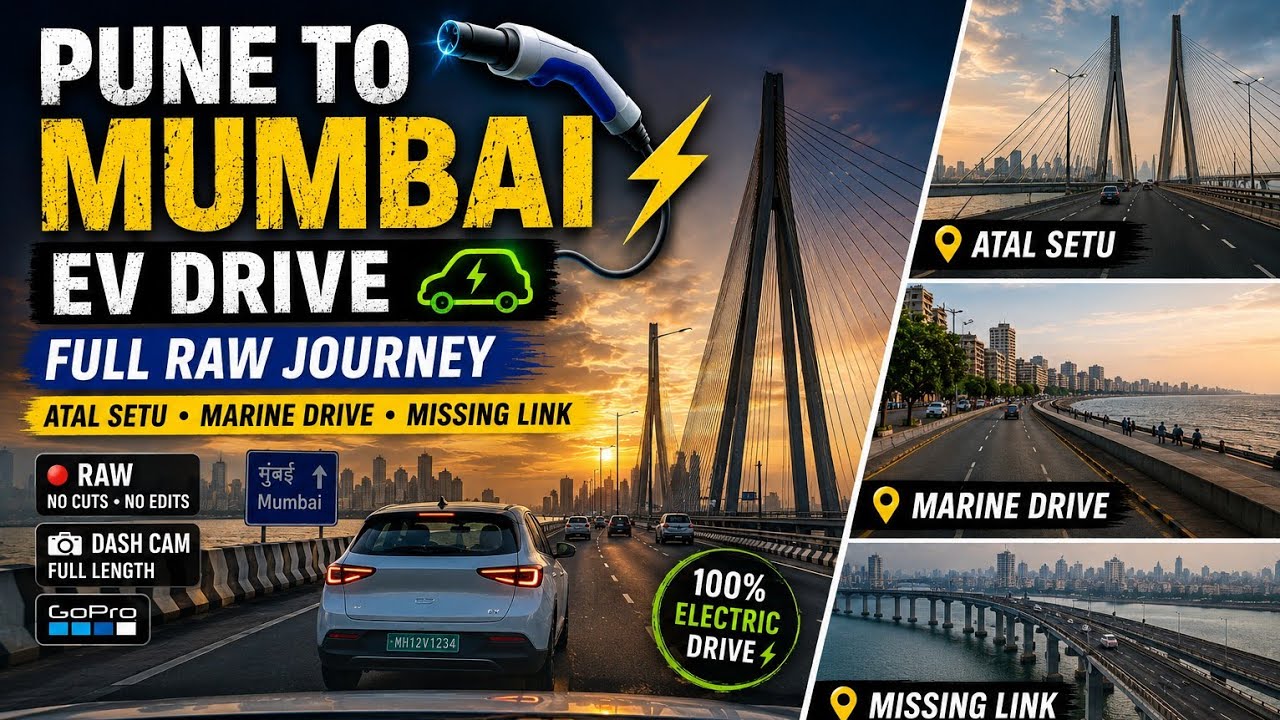
Woke Up at 3 AM for This | 300km EV Road Trip | Atal Setu at Dawn + Missing Link | Pune to Mumbai
August 28, 2026 — ny_wk
As an Amazon Associate I earn from qualifying purchases.
As an Amazon Associate I earn from qualifying purchases.
As an Amazon Associate I earn from qualifying purchases.
As an Amazon Associate I earn from qualifying purchases.
As an Amazon Associate I earn from qualifying purchases.
As an Amazon Associate I earn from qualifying purchases.
As an Amazon Associate I earn from qualifying purchases.
As an Amazon Associate I earn from qualifying purchases.
As an Amazon Associate I earn from qualifying purchases.
As an Amazon Associate I earn from qualifying purchases.
As an Amazon Associate I earn from qualifying purchases.
As an Amazon Associate I earn from qualifying purchases.
As an Amazon Associate I earn from qualifying purchases.
As an Amazon Associate I earn from qualifying purchases.
As an Amazon Associate I earn from qualifying purchases.
As an Amazon Associate I earn from qualifying purchases.
As an Amazon Associate I earn from qualifying purchases.
As an Amazon Associate I earn from qualifying purchases.
As an Amazon Associate I earn from qualifying purchases.
As an Amazon Associate I earn from qualifying purchases.
As an Amazon Associate I earn from qualifying purchases.
As an Amazon Associate I earn from qualifying purchases.
As an Amazon Associate I earn from qualifying purchases.
As an Amazon Associate I earn from qualifying purchases.
🛒 Recommended gear on AmazonDisclosure: some links above are affiliate links — if you buy through them I may earn a small commission at no extra cost to you. Thanks for supporting the channel!
As an Amazon Associate I earn from qualifying purchases.
As an Amazon Associate I earn from qualifying purchases.
As an Amazon Associate I earn from qualifying purchases.
I drove 300km from Pune to Mumbai and back in a Tata Punch EV — leaving home at 3:40 AM in pouring monsoon rain, crossing Atal Setu at dawn, walking Marine Drive at sunrise, clearing a 9 AM appointment at Nariman Point, charging at The Oberoi, and returning through the Missing Link cable-stayed bridge in the Western Ghats — all wrapped up by 2:00 PM in Dhanori. This is the complete record of that trip: the route, the EV range realities, and what India's longest sea bridge looks like when you have it almost entirely to yourself.
Why I Set My Alarm for 3 AM — and Actually Got Up
Let me be honest with you. I've played early-morning volleyball sessions that required a 5 AM alarm and I've still managed to hit snooze. But this was different. The whole plan turned on a single constraint: a meeting in Nariman Point at 9 AM, a 150km drive one way, and an absolute determination to see Atal Setu at dawn rather than in bumper-to-bumper afternoon traffic.
Mumbai's sea bridge — the Atal Bihari Vajpayee Sewri-Nhava Sheva Atal Setu, which formally opened on January 12, 2024 — stretches 21.8km across Thane Creek. That makes it India's longest sea bridge, a title it holds comfortably. At 7 AM on a weekday in monsoon season, I figured it would be quiet. I was right. But to get there at 7 AM from Dhanori, Pune, you leave at 3:40 AM.
So the alarm went off at 3:00 AM. I was out the door forty minutes later with a thermos of tea, the Punch EV showing a full charge, and rain already hammering the windscreen.
Night Drive on the Mumbai-Pune Expressway — Monsoon at 3:40 AM
The Mumbai-Pune Expressway (NH 48) is one of India's great feats of civil engineering — India's first six-lane expressway, running 94.5km through the Sahyadri range, cutting through tunnels and viaducts that once took three hours of ghat-road torture. In daylight it's spectacular. At 3:40 AM in heavy monsoon, it is something else entirely.
Rain was sheeting across the road in curtains. The DRLs of the Punch EV punched two weak cones into the wet tarmac ahead. For the first forty minutes, I barely saw another vehicle. The toll plazas were ghost towns — FASTag beeps in the darkness, an orange booth glow, and then back into the black. The expressway cuts through Khalapur and climbs toward Khopoli before the ghat section begins, and in those pre-dawn hours the only company was the percussion of rain on the roof and the distant rumble of long-haul trucks.
What I noticed — and what you notice when you drive an EV at night — is the silence inside the cabin. There's no engine note, no low-speed diesel clatter. Just rain, tyres on wet asphalt, and the hum of the motor when you touch the accelerator. It makes the monsoon feel more intimate, somehow. More immediate.
The ghat section deserves its own paragraph. The Sahyadri Range at this hour in the monsoon is pure theatre. Fog sits in the valleys below the expressway, lit orange at the edges by distant city light. Waterfalls appear without warning on both sides, white ropes of water falling off black rock faces. The road surface was wet throughout but the drainage on the expressway is good — no pooling, no drama. Cruise control off, both hands on the wheel, speed down to a sensible level. The EV's regen braking did a quiet, steady job on the long descent toward Mumbai.
Dawn began breaking around 6:00 AM as I cleared the ghat section and the Mumbai suburbs started closing in. By 6:30 AM the sky had shifted from black to a smudged charcoal grey shot through with orange at the horizon. The rain had eased to a fine drizzle.
Atal Setu at Dawn — India's Longest Sea Bridge Like You've Never Seen It
I reached the Atal Setu toll plaza on the Sewri side just before 7:00 AM. And here's what nobody tells you about this bridge: if you time it right, in the early morning before the city fully wakes up, you have those 21.8km almost to yourself.
The structure is genuinely awe-inspiring. Atal Setu — formally the Mumbai Trans Harbour Link — cost approximately ₹17,843 crore and took years to build across Thane Creek, connecting Sewri in Mumbai Island to Chirle near Nhava Sheva in Navi Mumbai. It's a six-lane concrete viaduct at water level, close enough to the sea surface that in monsoon the boundary between bridge and ocean feels blurred. On both sides, the water was silver-grey and choppy, fading into a foggy horizon.
At dawn, with the city skyline building behind me to the right and the JNPT port cranes barely visible to the left through the haze, the bridge felt enormous in a way that a daytime crossing in traffic never lets you feel. No cars piling up in your mirrors. No aggressive lane-changers. Just 21.8km of road over water, a lightening sky, and the Punch EV humming along at a steady 80 km/h.
I've seen photos of this bridge. I've seen it from the air. Nothing prepares you for actually driving it at first light in the monsoon season when the creek is in full surge and the air smells of salt and rain. If you ever drive Mumbai, plan it for dawn. Set whatever alarm you need to set.
The crossing takes roughly 16-18 minutes at a steady speed. By the time I completed the return crossing later that morning — around 10:45 AM in full daylight — the bridge was busy, the sea was a different colour, and it was a completely different experience. Both are worth doing. The dawn crossing wins.
Marine Drive, Nariman Point, and a Surprise EV Top-Up at The Oberoi
I rolled into South Mumbai before 7:30 AM and parked near Marine Drive. The 3.6km promenade along the Arabian Sea — officially Netaji Subhash Chandra Bose Road — is one of those places that changes personality by the hour. At 7:28 AM on a monsoon morning it belongs to the walkers: serious morning walkers in raincoats, the occasional runner, a few fishermen with their backs to the city, and me, distinctly not dressed for the weather, doing the full stretch from one end toward Nariman Point on foot.
The sea was rough and green. The Queen's Necklace — the famous curved arc of street lights that gives Marine Drive its nickname — was still lit, reflecting in the wet road surface. Cloud sat low over the horizon and the buildings behind the promenade were misted at their upper floors. It was not postcard weather. It was better than postcard weather. It was the actual city, being itself, in the rain.
The 9 AM appointment at Nariman Point — Mumbai's CBD, home to high-rises, the Air India building, and the NCPA — wrapped up as scheduled. After that came the practical business of the day: the Punch EV had consumed a significant portion of its charge on the 150km overnight run, and I needed enough to get home.
The solution: Tata Power's 60kW DC fast charger at The Oberoi, Nariman Point. This is one of the better-located public fast chargers in South Mumbai — a 60kW unit means the Punch EV's battery (which accepts DC fast charging) can add meaningful range in 30-40 minutes. I plugged in while the appointment was finishing, grabbed a coffee, and by 10:30 AM had enough charge to make the return run with comfortable margin.
The EV charging infrastructure story in Mumbai is still patchy — you can plan a South Mumbai-to-Pune run confidently because the Tata Power network has reliable fast chargers at a few premium locations, but you do need to plan ahead. Spontaneous charging stops along the expressway itself are sparser. The lesson: charge at your destination, not en route, whenever you can.
The Missing Link — The Western Ghats Cable Bridge That Changes Everything
The return journey on the expressway hit the Missing Link at 3:43 in the video, and around 12:30 PM in real time. If you've driven the Mumbai-Pune Expressway and missed this, you've been taking the old route.
The Missing Link — formally a cable-stayed bypass through the Sahyadri hills — was the final section of the expressway that completed the controlled-access corridor through the ghats, bypassing the old NH4 switchbacks through Khopoli and Khandala. It's a cable-stayed bridge structure that cuts through the hills at elevation, and nothing on the regular expressway quite prepares you for the scale of it.
Cable-stayed bridges work differently from suspension bridges: the cables run directly from tall towers (pylons) to the bridge deck, creating a fan or harp pattern that is both structurally efficient and visually dramatic. On the Missing Link section, the pylons rise against the green Sahyadri hillside, and in monsoon — when the slopes are saturated green and waterfalls are running — the contrast of white concrete cables against jungle green is extraordinary. At 12:30 PM, with the morning rain gone and the Western Ghats steaming in filtered sunlight, this section of road looked nothing like any expressway I've driven.
The crossing takes a few minutes at expressway speed but I recommend slowing where it's legal and safe to take it in. The full cable bridge crossing — as the video shows — is a sustained visual experience, not a blink-and-miss moment. The road curves gently through the hills, the cables shift their geometry as your angle changes, and the valley below opens up and closes. It is genuinely one of the more beautiful bits of road in Maharashtra.
After the Missing Link comes the Sahyadri descent and the long flat run back toward Pune. I made a stop at 12:40 PM in the Western Ghats — a small roadside point where you can step out and look back at the hills — before the final push home. Dhanori by 2:00 PM. Ten hours and twenty minutes door to door, 300km total.
Tata Punch EV on a 300km Pune-Mumbai Run — What the Range Is Really Like
Let me give you the honest EV assessment, because the internet has plenty of claimed-range numbers and not enough real-world runs with real conditions.
The Tata Punch EV — specifically the Long Range variant — carries a 35kWh usable battery and a claimed range that varies between around 315-421km depending on the trim and test cycle (MIDC). Real-world range on a highway run in India is a different number.
- Night driving advantage: The 3:40 AM departure meant cooler temperatures and almost zero traffic, both of which help EV range. No aggressive braking-and-acceleration cycles. Regen braking on the ghat descent added some charge back.
- Monsoon penalty: Rain increases rolling resistance slightly and keeping wipers + headlights + HVAC running adds to consumption. Not dramatic, but real.
- Highway speed penalty: EV range is very sensitive to speed. At 80-90 km/h on the expressway you're in a reasonable efficiency band; push to 110-120 and consumption climbs steeply. Steady cruising at 80 km/h is the sweet spot for range on this car.
- The top-up at Nariman Point: The single 60kW charging stop at The Oberoi — roughly 30-40 minutes — provided enough buffer to complete the return leg without anxiety. Without it, the return on the charge remaining after the outward 150km would have been uncomfortable if not impossible in a single Punch EV charge.
- The verdict: The Punch EV handles this Pune-Mumbai-Pune circuit comfortably with one planned fast-charging stop. It is not a stressful drive if you plan the stop. It is a stressful drive if you don't.
One practical note for anyone planning the same trip: the Tata Power charging app lets you see connector status before you arrive. Check it before you leave Nariman Point. The last thing you want is a queue at the only 60kW charger in South Mumbai when you have a 150km expressway run ahead of you.
DC fast charging on the Punch EV is limited by the car's onboard charger spec — you won't always get the full 60kW from a 60kW station, but you'll get a meaningful fill rate that makes 30-40 minute stops practical rather than the hour-plus ordeal of older EVs on slower chargers.
Key Takeaways
- Atal Setu at dawn is categorically different to Atal Setu in traffic — plan for a 3-4 AM departure from Pune if you want the bridge to yourself and the light right.
- The Tata Punch EV handles 300km Pune-Mumbai-Pune with one fast-charging stop; the Tata Power 60kW unit at The Oberoi Nariman Point is a reliable anchor for South Mumbai charging.
- The Missing Link cable-stayed bridge through the Western Ghats is one of Maharashtra's most underrated pieces of infrastructure — slow down and take it in.
- Mumbai-Pune Expressway in monsoon at 3 AM is safe but demands full attention — surface drainage is good, visibility is the main challenge; keep speeds sane and the EV's low-noise cabin works in your favour for concentration.
- Marine Drive at 7:30 AM in the rain is better than Marine Drive in tourist season — the city is awake but not crowded; you get the promenade, the rough sea, and the skyline without fighting for a spot to stand.
Frequently Asked Questions
Can you drive Pune to Mumbai and back in a Tata Punch EV without charging?
Not comfortably. The round trip is approximately 300km, and while the Tata Punch EV Long Range has a claimed range of around 315-421km, real-world highway speeds reduce that significantly. One planned DC fast-charging stop in Mumbai — ideally at a Tata Power 60kW charger — makes the full circuit stress-free.
What time does Atal Setu open, and is it worth going at dawn?
Atal Setu (Mumbai Trans Harbour Link) operates 24 hours. It is absolutely worth going at dawn — the 21.8km crossing over Thane Creek is dramatically less crowded in the early morning, the light is better, and the full scale of India's longest sea bridge is far easier to appreciate when you're not locked in a traffic crawl.
Where is the Missing Link bridge on the Mumbai-Pune Expressway?
The Missing Link is the cable-stayed bypass section of the Mumbai-Pune Expressway that cuts through the Sahyadri hills, bypassing the old NH4 ghat road. It is encountered on the return journey from Mumbai toward Pune, in the Western Ghats section before you drop down toward Khopoli. It is a visually dramatic stretch — watch for the cable-stayed towers rising over the jungle.
Is the Mumbai-Pune Expressway safe to drive in monsoon at night?
The expressway's drainage and engineering handle monsoon conditions reasonably well — pooling is uncommon on the main carriageway. The real challenge at night in heavy rain is visibility. Keep speeds appropriate for conditions (80 km/h or less in heavy rain), turn on headlights and fog lights where fitted, and stay alert on the ghat section where fog can appear suddenly, especially in monsoon months (June-September).
If you want to see every moment of this — Atal Setu materialising out of the pre-dawn dark, Marine Drive completely empty at 7:28 AM, the Missing Link cables against the monsoon-green Sahyadri hillside — it's all in the video. Watch Woke Up at 3 AM for This | 300km EV Road Trip | Atal Setu at Dawn + Missing Link | Pune to Mumbai on @explorenystream. Subscribe for more Pune road trips, real-world EV driving, and whatever the Ghats look like at whatever ungodly hour I decide to set the alarm for next.