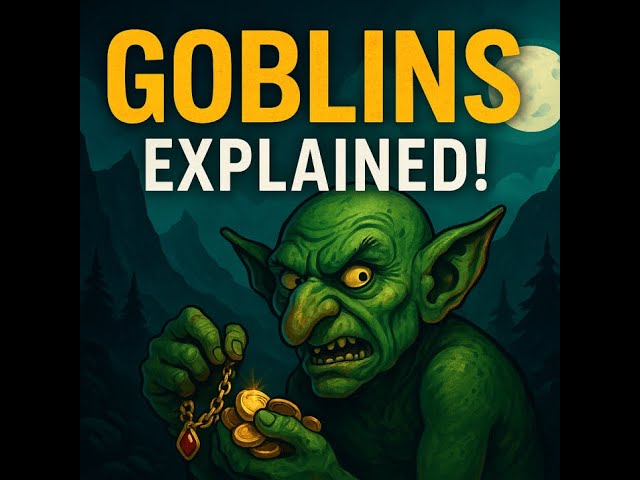
Goblins Explained | Myth, Types & Legends You Didn't Know!
September 21, 2026 — ny_wk
🛒 Recommended gear on AmazonDisclosure: some links above are affiliate links — if you buy through them I may earn a small commission at no extra cost to you. Thanks for supporting the channel!
🛒 Today's Picks on Amazon
As an Amazon Associate I earn from qualifying purchases.
As an Amazon Associate I earn from qualifying purchases.
Journey into the captivating world of goblins, creatures of myth and legend that have haunted folklore for centuries, spanning dark forests to bustling cityscapes in tales that continue to intrigue and mystify. From mischievous pranksters to sinister subterranean dwellers, understanding the diverse types and rich mix of goblin myths offers a fascinating glimpse into the cultural imaginations of various regions.
The very word "goblin" often conjures images of small, grotesque, and malevolent beings, lurking in shadows, hoarding treasures, and causing general mischief. But to dismiss them as mere Halloween decorations would be to overlook a rich and complex history woven into the fabric of European folklore and beyond. These creatures are far more than simple monsters; they are reflections of our fears, our desires, and our attempts to explain the unexplainable in the natural world.
What truly defines a goblin, and how do they differ from other fae creatures or subterranean entities? The answer, as with most folklore, is delightfully varied and regionally specific. One might encounter a helpful household goblin in one tale, only to find a terrifying, child-snatching boglin in another. This exploration will dig into the origins, characteristics, and enduring appeal of these legendary beings, providing a comprehensive guide to the fantastical realm of goblins and their many forms.
The Etymology and Origins of Goblin Legends
The word "goblin" itself carries a curious linguistic history, believed to derive from the Old French "gobelin," a diminutive of a Germanic name like "Kobold" or "Gobel." This etymological root immediately hints at a deep connection to other European mythical figures. The French "gobelin" first appeared in the 12th century, specifically in the tale of the ghost of a spirit named Gobelin haunting Evreux.
Tracing the origins of goblin folklore leads us through a fascinating labyrinth of ancient beliefs and superstitions. Many scholars suggest that goblins, along with other similar creatures like gnomes and kobolds, emerged from animistic traditions where natural phenomena and everyday objects were imbued with spirits. The creaking of old houses, the rustling in the woods, or the strange noises from deep within a mine could easily be attributed to these unseen entities.
Early European mythology, particularly in Germanic and Celtic traditions, is replete with small, often ill-tempered, and sometimes helpful spirits. These proto-goblins often served as explanations for minor misfortunes or unexpected good luck. For instance, a lost tool might be blamed on a mischievous "house sprite," a precursor to the domestic goblin, while a sudden windfall could be attributed to a benevolent underground dweller. The transition from these general sprites to the more specific "goblin" moniker signifies a crystallization of certain characteristics: a preference for darkness, a penchant for hoarding, and an ambiguous moral compass that leans heavily towards the mischievous or outright malevolent.
The concept of subterranean dwelling creatures is a common thread in many cultures, often linked to mining communities where the sounds and dangers of the underground environment would naturally foster tales of mysterious inhabitants. Goblins, with their association with caves, mines, and hidden treasures, fit this archetype perfectly. Their small stature and often grotesque appearance made them ideal antagonists in cautionary tales or explanations for mining accidents and strange occurrences deep within the earth.
Diverse Types of Goblins Across Global Folklore
While the popular image of a goblin might be relatively uniform thanks to modern fantasy literature and film, traditional folklore paints a much richer and more diverse picture. The term "goblin" often acts as an umbrella for a host of smaller, often malevolent, humanoid creatures found across various cultures. Understanding these distinctions is key to truly appreciate the breadth of goblin types.
European Goblins: From Household Pests to Mountain Dwellers
- Kobolds (Germanic): Perhaps the closest relatives, Kobolds are German household spirits. They can be helpful, assisting with chores, but are easily offended and will turn malicious if disrespected. Some varieties are also associated with mines, known for their metallic luster and trickery with ore.
- Brownies/Boggarts (Scottish/English): Brownies are generally benevolent household spirits who help with chores, often requiring only a bowl of milk or cream as payment. Their darker cousins, Boggarts, are malevolent, causing mischief, bad luck, and even actively frightening residents. They are often associated with specific places, like a boggart haunting a particular farm.
- Redcaps (Scottish Borders): These are truly sinister goblins, known for dyeing their caps in the blood of their victims. They inhabit old, ruined castles and are exceptionally dangerous, characterized by their iron fingers and fierce disposition.
- Phookas/Púcas (Irish): While often shape-shifters appearing as animals, some Púcas can take a more humanoid, grotesque form, akin to a goblin. They are known for both benevolent and malevolent acts, sometimes helping farmers but also leading travelers astray.
- Duergar (Norse/Scottish): These are a darker, more malevolent version of dwarves, often associated with mountains and mines. They are skilled blacksmiths but are known for their spite and trickery, sometimes kidnapping people and forcing them into servitude. Their name is related to "dwarf," but their nature is distinctly more goblin-like in its malice.
Beyond Europe: Global Goblin-like Entities
While the term "goblin" is predominantly European, many cultures around the world have their own versions of small, mischievous, and often malevolent spirits that share characteristics with their European counterparts.
- Oni (Japanese): Though often much larger and more demonic in appearance, some smaller, lesser Oni, or their cousins like the Tengu (which can be mischievous), share a mischievous and sometimes malevolent nature with goblins. They are often depicted with horns, sharp claws, and wild hair.
- Duende (Filipino/Spanish/Latin American): These are small, elf-like or goblin-like creatures, often associated with forests, fields, or even homes. They can be benevolent, leading lost children home, or mischievous, hiding things or causing minor annoyances. Their nature depends heavily on regional belief.
- Gremlins (20th Century English/American): A more modern addition to folklore, Gremlins emerged during World War II, blamed for mechanical failures in aircraft. They are essentially industrial goblins, small and mischievous, with a knack for sabotage.
This rich mix of mythical creatures demonstrates that the human imagination, when confronted with the unexplained or the uncanny, often resorts to personifying these forces into small, often grotesque, and frequently malevolent beings. The universality of such figures speaks to shared human anxieties about the unknown and the desire to attribute agency to misfortune.
Goblins in Culture: From Folk Tales to Modern Fantasy
The enduring appeal of goblins extends far beyond ancient folklore, profoundly influencing literature, art, and popular culture. Their transition from local superstitions to global fantasy icons is a sign of their versatility and the dark fascination they hold. The legends of goblins have been reinterpreted and reshaped by countless storytellers, each adding new layers to their complex identity.
Literary Goblins: Shaping Modern Perceptions
One cannot discuss goblins in modern culture without acknowledging the profound impact of J.R.R. Tolkien's works, particularly The Hobbit and The Lord of the Rings. Tolkien's goblins, distinct from his orcs (though often used interchangeably in some contexts), are portrayed as vile, subterranean beings, weak in sunlight, and subservient to greater evils. They are brutish, cruel, and obsessed with tools and machinery of war. Tolkien's detailed descriptions, such as the Great Goblin of the Misty Mountains, cemented an image of these creatures as a widespread, organized, and dangerous threat, distinct from the solitary pranksters of earlier folklore. This portrayal became the template for countless fantasy narratives, making them common antagonists in RPGs and fantasy novels.
However, Tolkien was not the first. George MacDonald's The Princess and the Goblin (1872) offers an earlier, influential portrayal. Here, goblins are banished underground, developing a hatred for those on the surface. They are not inherently evil but misguided and vengeful, with grotesque appearances and a specific aversion to poetry. This earlier depiction provides a more nuanced view, where their malevolence stems from their perceived mistreatment and isolation, influencing stories that explore the concept of "monsters" with a degree of empathy.
Other notable literary examples include Christina Rossetti's "Goblin Market," where goblins are seductive, dangerous figures tempting maidens with enchanted fruit, blending allure with peril. This poem highlights a different facet of goblin legends: their connection to the wild, forbidden, and potentially corrupting aspects of nature.
Goblins in Art and Visual Media
From medieval illuminated manuscripts to modern cinematic blockbusters, goblins have been a rich source of inspiration for artists. Early depictions often showed them as small, demonic figures, sometimes with animalistic features like horns or pointed ears, reflecting their connection to pagan deities or chthonic spirits. The grotesque nature of goblins makes them ideal subjects for conveying fear and disgust, allowing artists to explore the boundaries of human and monstrous forms.
In contemporary visual media, goblins are staples of fantasy films, video games, and comic books. They often retain their small stature, green or grey skin, pointed ears, and malevolent grins. Their roles vary widely: from the cannon fodder enemies in countless RPGs (think World of Warcraft or Dungeons & Dragons) to more complex characters like the Goblins of Gringotts Bank in the Harry Potter series. These banking goblins are depicted as highly intelligent, meticulous, and fiercely protective of their gold, adding a layer of sophisticated bureaucracy and cunning to the traditional image of the simple, brutish goblin.
The aesthetic of goblins has also influenced subgenres like urban fantasy, where they might lurk in forgotten corners of cities, adapting their ancient mischief to modern environments. This constant evolution ensures that goblins remain relevant and terrifying (or sometimes even endearing) to new generations of audiences. The sheer variety of their appearances and roles demonstrates the creative freedom that their malleable mythology affords storytellers.
The Psychology Behind Goblin Mythology
Why do creatures like goblins hold such a firm grip on the human imagination? The study of mythical creatures and their origins often reveals deep-seated psychological and sociological underpinnings. Goblins, in their myriad forms, serve as projections of human fears, anxieties, and even our baser instincts.
Personifying Fear and the Unknown
At a fundamental level, goblins embody our fear of the unknown. They lurk in dark places – caves, forests, the undergrowth, the neglected corners of a house. These are liminal spaces, thresholds between the known and the unknown, where danger might hide. The sudden disappearance of an object, a strange noise in the night, or an unexplained sickness could easily be attributed to the mischievous or malevolent actions of an unseen goblin. This personification allows humans to externalize and, to some extent, categorize and therefore "manage" their anxieties about forces beyond their control.
Their grotesque appearance – often described as ugly, deformed, or monstrous – taps into a primal fear of the "other." In many cultures, physical deformity was often associated with evil or bad omens. Goblins, with their twisted features and malevolent grins, represent a departure from the beautiful and the good, serving as visual shorthand for villainy.
Reflecting Societal Anxieties and Morals
Goblins also frequently reflect societal anxieties and moral lessons. Their penchant for stealing, hoarding treasure, and causing chaos can be seen as a metaphorical representation of greed, envy, and disorder. Children's tales often feature goblins as figures to warn against wandering too far from home, speaking to strangers, or being lazy. The dangers posed by goblins often underscore the importance of community, order, and adherence to social norms.
In an agricultural society, a goblin blamed for blighting crops or souring milk could be a way to cope with inexplicable natural disasters, giving a tangible (if fantastical) enemy to blame when real solutions were unavailable. Similarly, in mining communities, gnomes and goblins acted as explanations for cave-ins or pockets of poisonous gas, transforming deadly geological hazards into figures of supernatural trickery or malice.
Furthermore, the ambiguous nature of some goblins – sometimes helpful, sometimes harmful – mirrors the unpredictable nature of the world itself. It teaches a lesson in respect and caution: not all that appears strange is evil, but not all that seems harmless is good. This nuanced portrayal encourages vigilance and an understanding that reality, even in its most fantastical forms, is rarely black and white.
The continued fascination with goblins in popular culture also speaks to our desire to explore these dark facets of the human condition in a safe, fictional setting. They provide a convenient and compelling antagonist against which heroes can be measured, allowing us to confront our fears without real danger. Through the lens of goblin mythology, we gain insights into both ancient beliefs and the enduring psychological landscape of humanity.
Plan Your Visit: Exploring Goblin-Inspired Destinations and Folklore
While you won't find actual goblins in physical locations (we hope!), many places around the world draw heavily on their lore, offering unique travel experiences for those fascinated by these creatures. From ancient forests steeped in legend to museums dedicated to folklore, exploring these locations can bring the world of goblins to life.
Enchanted Forests and Ancient Caves
Many of the oldest goblin legends are tied to natural, untamed spaces. Visiting ancient woodlands and cave systems across Europe can evoke the very atmosphere that fostered these myths. Consider:
- The Black Forest, Germany: This vast, dense forest is a heartland of Germanic folklore, home to tales of wood sprites, kobolds, and other mischievous creatures. Hiking its dark trails and exploring its deep valleys can feel like stepping into a Grimm fairy tale. Keep an eye out for strange rock formations or gnarled trees – perfect hiding spots for a forest goblin.
- Caves of Drach, Mallorca, Spain: While famous for their stunning stalactites and underground lakes, such ancient, deep cave systems across Europe (like those in Slovenia or France) have historically been associated with subterranean dwellers. Imagining small, grotesque beings lurking in the shadows of these vast caverns adds an extra layer of mystique to your visit.
- Dartmoor National Park, England: This wild and rugged moorland is famous for its tors, ancient stone circles, and a wealth of folklore involving pixies, piskies, and other small, often mischievous, fae folk who share many characteristics with goblins. A walk across the moor, especially on a misty day, can feel incredibly atmospheric.
Folklore Museums and Cultural Sites
For a more curated experience, numerous museums and cultural centers dig into the rich mix of local folklore, often featuring exhibits on goblin-like entities:
- The British Museum, London, UK: While not specifically a "goblin museum," its vast collection includes artifacts from cultures rich in fae and mythical creature lore, offering context for the development of such beliefs. Check for special exhibits on European folklore.
- Various Regional Folklore Museums in Germany and Scandinavia: Many smaller towns and regions, particularly in areas with strong oral traditions, host museums dedicated to local legends, including the various sprites, house spirits, and underground dwellers that informed goblin mythology. A simple Google search for "folklore museum [region]" can yield fascinating results.
- Historical Castles and Ruins: Many old castles across Scotland, England, and France have their own resident "boggarts" or "brownies" in their legends. Visiting these atmospheric ruins allows you to walk through places where these tales were once firmly believed.
Tips for the Folklore Enthusiast Traveler:
- Research Local Legends: Before visiting a region, research its specific folklore. You might discover unique goblin-like creatures specific to that area, enriching your understanding and experience.
- Engage with Locals: Local guides or long-time residents often have fascinating stories and insights into the regional myths and superstitions.
- Visit Off-Season: To truly experience the eerie, mystical atmosphere sometimes associated with goblin lore, consider visiting natural sites during quieter times of the year, like autumn or early spring, when mists and solitude enhance the feeling of stepping into a forgotten world.
- Read Before You Go: Immerse yourself in the relevant literature – from ancient fairy tales to modern fantasy novels – to deepen your appreciation for the locations you're visiting.
Embarking on a journey inspired by goblin legends is more than just sightseeing; it's an exploration of human imagination, cultural history, and the primal connection we have to the unexplained aspects of our world. It’s an adventure that will leave you with a richer understanding of these enigmatic creatures and the timeless power of storytelling.
Key Takeaways
- Goblins are diverse mythical creatures found predominantly in European folklore, often characterized by their small stature, grotesque appearance, and mischievous to malevolent nature.
- The term "goblin" has Old French roots, connecting it to Germanic "Kobolds" and other household or subterranean spirits.
- Various cultures have their own specific types of goblin-like entities, ranging from the helpful (but easily offended) Kobolds and Brownies to the sinister Redcaps and Duergar.
- Goblins have significantly influenced literature and popular culture, with J.R.R. Tolkien's portrayal in Middle-earth being particularly influential in shaping modern fantasy perceptions.
- Psychologically, goblins often represent human fears of the unknown, the "other," and serve as a means to personify natural phenomena, misfortunes, and societal anxieties.