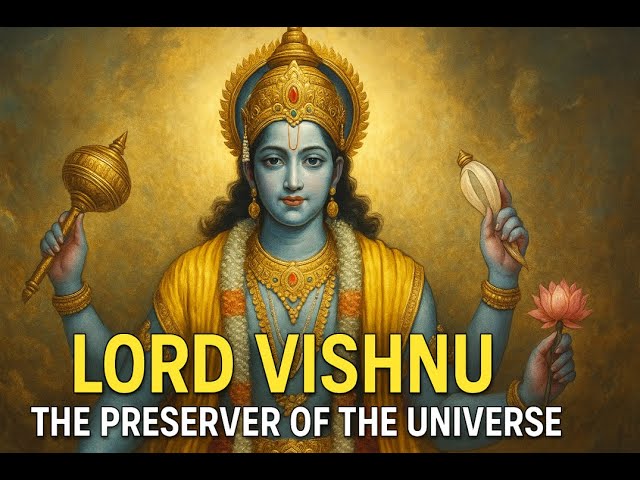
Lord Vishnu – The Protector of the Universe | Full Story & Significance
September 20, 2026 — ny_wk
🛒 Recommended gear on AmazonDisclosure: some links above are affiliate links — if you buy through them I may earn a small commission at no extra cost to you. Thanks for supporting the channel!
As an Amazon Associate I earn from qualifying purchases.
Journey into the heart of Hindu cosmology to unravel the profound narrative of Lord Vishnu, the revered Protector of the Universe. This comprehensive exploration delves into the full story and enduring significance of one of the most vital deities in the Hindu pantheon, offering insights for both spiritual seekers and cultural explorers.
🛒 Today's Picks on Amazon
As an Amazon Associate I earn from qualifying purchases.
Hinduism, with its rich mix of gods, goddesses, and ancient narratives, presents a spiritual landscape unlike any other. At the very core of this vibrant faith lies the divine trinity: Brahma the Creator, Vishnu the Preserver, and Shiva the Destroyer. Among these, Lord Vishnu holds a paramount position, often hailed as the Protector of the Universe. His stories are not merely mythological tales but profound teachings, metaphors for cosmic order, and guides for righteous living. Understanding Lord Vishnu is to grasp a fundamental pillar of Hindu philosophy, exploring his various forms, legendary exploits, and the unwavering dharma he upholds.
The Cosmic Role of Lord Vishnu: Upholding Dharma and Order
In the vast expanse of Hindu scriptures, Lord Vishnu is consistently depicted as the cosmic preserver, the deity responsible for maintaining balance, order, and righteousness – known as Dharma – throughout creation. While Brahma brings the universe into being and Shiva ultimately dissolves it, Vishnu ensures its continuity and protects it from forces of chaos and evil. He is often portrayed resting on the cosmic serpent Shesha (Ananta), floating on the primordial waters of creation, symbolizing his eternal vigilance and presence even before the universe manifests. This imagery, known as Anantasayana, speaks volumes about his transcendental nature and his role as the ultimate sustainer.
His divine consort is Lakshmi, the goddess of wealth, prosperity, and fortune, who always accompanies him. Their union signifies that sustenance and abundance are inseparable from cosmic preservation. Vishnu’s iconography is instantly recognizable: he typically holds four primary attributes in his four hands:
- Conch (Shankha): Symbolizes the primordial sound 'Om', the origin of existence, and the victory of good over evil.
- Chakra (Sudarshana Chakra): A divine discus representing the mind, cosmic order, and the destruction of negativity.
- Mace (Gada): Symbolizes mental and physical strength, and the power of knowledge.
- Lotus (Padma): Represents purity, beauty, spiritual liberation, and cosmic creation.
These attributes are not mere ornaments but powerful symbols that encapsulate Vishnu's multifaceted role as the preserver, reminding devotees of his divine attributes and protective capabilities. His blue complexion often signifies his all-pervasiveness, like the sky and the ocean, boundless and infinite.
The Dashavatara: Vishnu's Ten Incarnations to Restore Balance
Perhaps the most fascinating aspect of Lord Vishnu's mythology is his concept of Dashavatara, the ten primary avatars or incarnations he takes to descend to Earth whenever righteousness declines and evil forces threaten cosmic balance. Each avatar serves a specific purpose, demonstrating Vishnu's adaptive and compassionate nature in protecting humanity and all living beings. These stories are not just tales; they are foundational narratives for millions of adherents, offering moral guidance and demonstrating divine intervention in times of crisis.
The Ten Principal Avatars:
- Matsya (Fish): Rescued Manu (the progenitor of mankind) from a great flood, saving sacred texts and all species.
- Kurma (Tortoise): Supported the Mandara mountain during the Samudra Manthan (churning of the cosmic ocean) to retrieve divine nectar, symbolizing resilience and support.
- Varaha (Boar): Rescued the Earth goddess Bhudevi from the demon Hiranyaksha, lifting her from the cosmic ocean.
- Narasimha (Man-Lion): Half-man, half-lion, he appeared to destroy the demon Hiranyakashipu, who had a boon against being killed by man or beast, inside or outside.
- Vamana (Dwarf Brahmin): A dwarf brahmin who tricked the demon king Mahabali into giving him three paces of land, expanding to cosmic proportions to cover the entire universe in two steps, leaving the third step for Mahabali's head, thus restoring Indra's rule.
- Parashurama (Warrior with an Axe): A fierce warrior-sage who eradicated corrupt Kshatriya (warrior) kings, restoring dharma.
- Rama (Prince of Ayodhya): The protagonist of the epic Ramayana, embodying ideal kingship, duty, and virtue. His story is a cornerstone of Hindu ethics.
- Krishna (Divine Cowherd/King): A central figure in the Mahabharata and the Bhagavad Gita, revered as a complete Purna Avatar, representing love, wisdom, and strategic action.
- Buddha (Enlightened One): Often identified in Hindu texts as an avatar of Vishnu, who taught compassion and the path to enlightenment to misguided souls.
- Kalki (Future Avatar): Prophesied to appear at the end of the current Kali Yuga to destroy evil and restore righteousness, ushering in a new age of purity.
These avatars illustrate Vishnu's direct involvement in the world, not as a distant god, but as a compassionate protector who descends to re-establish justice. Each narrative offers profound ethical lessons and historical insights into the cultural fabric of ancient India, further cementing his role as the ultimate Protector of the Universe.
Vaishnavism: The Devotional Path Centered on Vishnu
The worship of Lord Vishnu forms the core of Vaishnavism, one of the major traditions within Hinduism. Devotees, known as Vaishnavites, consider Vishnu to be the Supreme Being, the source of all existence. This tradition emphasizes devotion (Bhakti Yoga), righteous conduct, and the chanting of Vishnu's names. Vaishnavism has given rise to numerous philosophical schools, temples, and pilgrimage sites across India and beyond, each celebrating different aspects and avatars of Vishnu.
Important Vaishnava scriptures include the Bhagavad Gita, which records the discourse between Lord Krishna (an avatar of Vishnu) and Arjuna on the battlefield of Kurukshetra, providing profound insights into duty, dharma, and the nature of reality. The Puranas, particularly the Vishnu Purana and Bhagavata Purana, meticulously detail Vishnu's exploits, avatars, and the cosmic order he maintains. These texts are not just historical records but living scriptures that guide millions of devotees in their daily lives.
Key Aspects of Vaishnava Devotion:
- Bhakti Yoga: The path of devotion, love, and surrender to Lord Vishnu.
- Mantra Chanting: Recitation of Vishnu's names, such as the "Om Namo Narayanaya", for spiritual upliftment.
- Temple Worship: Visiting and performing rituals in temples dedicated to Vishnu and his avatars.
- Festivals: Celebrating events like Rama Navami (birthday of Rama) and Krishna Janmashtami (birthday of Krishna) with great fervor.
The philosophy of Vaishnavism often speaks of moksha (liberation) through devotion to Vishnu, seeing him not just as a preserver but as the ultimate liberator from the cycle of birth and death (samsara). This profound spiritual outlook shapes the lives and practices of millions worldwide who revere Lord Vishnu as their supreme deity.
Lord Vishnu in Art, Culture, and Modern Relevance
The omnipresence of Lord Vishnu extends far beyond religious texts and rituals; he is a pervasive figure in Indian art, sculpture, classical dance, and folk traditions. Ancient temples across India, from the majestic temples of Tamil Nadu to the intricate carvings of Odisha, bear witness to the artistic devotion inspired by Vishnu. His iconic forms, especially the reclining Vishnu (Anantasayana) and the standing Vishnu (Vishvarupa), are masterpieces of ancient craftsmanship, drawing pilgrims and art enthusiasts alike.
In modern times, the stories of Lord Vishnu and his avatars continue to resonate. Television series, animated films, and comic books frequently adapt these timeless narratives, introducing new generations to the virtues and adventures of divine heroes like Rama and Krishna. These adaptations often highlight universal themes of good versus evil, duty, love, and the triumph of justice, making Vishnu's stories eternally relevant.
Plan Your Visit: Experiencing Vishnu's Legacy
For those seeking to experience the spiritual and cultural legacy of Lord Vishnu firsthand, a journey through India offers unparalleled opportunities. Consider visiting these significant sites:
- Tirumala Tirupati Devasthanams, Andhra Pradesh: Home to the Venkateswara Temple, one of the wealthiest and most visited religious centers in the world, dedicated to a form of Vishnu.
- Sri Ranganathaswamy Temple, Srirangam, Tamil Nadu: A vast temple complex dedicated to Ranganatha, a reclining form of Vishnu.
- Badrinath Temple, Uttarakhand: One of the Char Dham pilgrimage sites, dedicated to Badrinarayan (Vishnu).
- Dwarkadhish Temple, Dwarka, Gujarat: Dedicated to Lord Krishna, believed to be built on the site of Krishna's ancient city.
- Jagannath Temple, Puri, Odisha: Famous for its annual Rath Yatra (chariot festival), dedicated to Lord Jagannath, a form of Krishna/Vishnu.
These destinations offer not just architectural marvels but also a chance to immerse oneself in the vibrant devotional practices and living traditions associated with Lord Vishnu. Engaging with the local culture, observing rituals, and perhaps participating in a darshan (sacred viewing of the deity) can be a profoundly moving experience, deepening one's understanding of the enduring power of Vishnu, the Protector of the Universe.
Key Takeaways
- Lord Vishnu is a central deity in Hinduism, revered as the Protector and Preserver of the Universe.
- He is known for upholding Dharma (righteousness) and maintaining cosmic balance.
- The Dashavatara, his ten primary incarnations, are pivotal stories illustrating his intervention to restore order.
- Vaishnavism is a major Hindu tradition centered on the devotion to Vishnu and his avatars.
- Vishnu's influence is widespread in Indian art, culture, and continues to inspire millions globally.
Frequently Asked Questions
What is the primary role of Lord Vishnu in Hinduism?
Lord Vishnu's primary role is that of the preserver and protector of the universe. He is responsible for maintaining cosmic order (Dharma), ensuring the continuity of creation, and intervening when evil threatens to overwhelm goodness.
How many avatars does Lord Vishnu have, and why are they significant?
Lord Vishnu is most famously known for his Dashavatara, or ten principal avatars (incarnations). These avatars are significant because they represent Vishnu's direct descents to Earth to restore balance, eradicate evil, and guide humanity back to righteousness in various eras and circumstances.
What are the main symbols associated with Lord Vishnu?
Lord Vishnu is typically depicted with four main symbols in his four hands: the conch (Shankha), representing the primordial sound of creation and victory; the discus (Sudarshana Chakra), symbolizing cosmic order and destruction of evil; the mace (Gada), representing strength and knowledge; and the lotus (Padma), signifying purity and spiritual liberation.
Dive deeper into the mystical world of Hindu deities and explore the captivating narrative of Lord Vishnu, the Protector of the Universe. Watch the full story and more insightful content on @explorenystream and subscribe for a continuous journey into spiritual wisdom and cultural exploration.