
Pune to Mumbai in an EV — Atal Setu + Nariman Point + Missing Link Bridge
September 09, 2026 — ny_wk
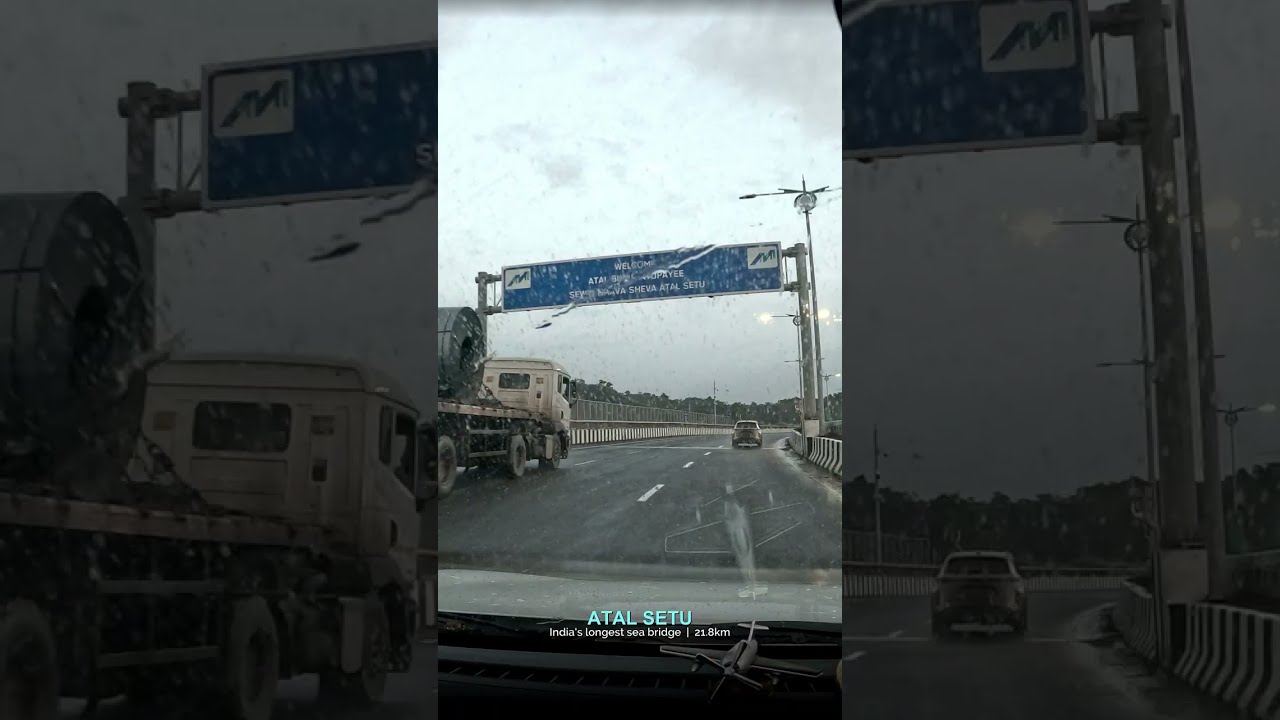
▶ Pune to Mumbai in an EV — Atal Setu + Nariman Point + Missing Link Bridge | Subscribe to @explorenystream
Disclosure: some links above are affiliate links — if you buy through them I may earn a small commission at no extra cost to you. Thanks for supporting the channel!
The Pune to Mumbai EV road trip is one of those drives that stays with you. Zero emissions, a fully charged battery before sunrise, and a route that takes you across three of India's most iconic bridges: Atal Setu, the Bandra-Worli Sea Link, and the lesser-known Missing Link cable bridge. Watch the full video above and keep reading for everything you need to plan your own electric vehicle journey on this corridor.
I left Pune at 4:30 AM. The city was quiet, the battery was at 97%, and the NH-48 heading toward Khopoli was empty in a way it almost never is. That is the only real trick to this drive: leave before the world wakes up.
The Route: Pune to Mumbai by Electric Vehicle
The standard route via the Expressway is 148 km, but the road trip version goes like this:
- Pune to Khopoli (NH-48 Mumbai Pune Expressway): 90 km of smooth, fast highway. An EV eats this stretch. Set the cruise, watch the Western Ghats light up as dawn breaks, and monitor your state of charge. At 120 km/h, consumption runs higher than city driving, but on a modern EV with a 400+ km rated range you arrive at Khopoli with well over 60% left.
- Khalapur Ghat (descent into the Konkan): This is where the EV advantage becomes obvious. The ghat drops steeply from the Deccan Plateau toward the coast, and regenerative braking means the motor is generating electricity on every bend. By the time I reached the bottom of the ghat, the battery had recovered nearly 4% — the car was charging itself on the descent.
- Khopoli to Panvel to Palm Beach Road: Once off the ghat, Mumbai's coastal geography takes over. Palm Beach Road runs parallel to Navi Mumbai's waterfront and feeds you directly onto Atal Setu.
- Atal Setu (Mumbai Trans Harbour Link): 21.8 km of open sea bridge. India's longest. Save the details for the next section — just know that this is the highlight of the entire journey.
- Sewri to Bandra-Worli Sea Link to Marine Drive to Nariman Point: The final sequence. Sea Link to South Mumbai, then the slow cruise down Marine Drive with the Arabian Sea on your right as the city comes alive.
Atal Setu: Driving Across India's Longest Sea Bridge at Sunrise
Atal Setu — formally the Mumbai Trans Harbour Link — opened on January 12, 2024. It connects Sewri in Mumbai to Nhava Sheva in Navi Mumbai across Thane Creek, spans 21.8 km, and carries six lanes of traffic. The project cost Rs 17,843 crore and took over a decade from conception to inauguration. Before it opened, getting from Navi Mumbai to Mumbai involved navigating Sion, Kurla, and some of the worst traffic corridors in the country. Now it takes 20 minutes.
But the numbers do not prepare you for what it actually looks like at sunrise. The bridge sits low over the water — low enough that you feel the scale of the sea rather than looking down at it from height. In the early morning, before the commuter traffic builds, the lanes are almost empty. The water on both sides picks up the orange and pink of the sky. Flamingos roost in the mudflats of Thane Creek — a colony of thousands — and if you time it right, the flocks are lifting and landing as you drive across.
For an EV driver, Atal Setu is close to perfect. No traffic, no stop-start, flat road at constant speed. Consumption is low. The 20-minute crossing from Nhava Sheva to Sewri is the most effortless part of an already effortless drive.
Toll: Rs 250 for a car (one way, 2026 rates). FASTag accepted. There are no dedicated EV lanes but the FASTag lanes move fast.
Bandra-Worli Sea Link and the Missing Link Cable Bridge
After Atal Setu, the route through South Mumbai brings you to the Bandra-Worli Sea Link — 5.6 km of cable-stayed bridge across Mahim Bay, opened in 2009. Where Atal Setu feels open and horizontal, the Sea Link feels vertical: the cable towers rise 128 metres above the carriageway and the approach from the Bandra side gives you a view of the Mumbai skyline that appears in every travel photograph of the city. It cuts 45 minutes off the journey between the western suburbs and South Mumbai during peak hours. At 6 AM it is simply fast and beautiful.
The bridge most people miss is the Missing Link — a cable-stayed flyover that connects the Eastern and Western Express Highways in Mumbai. It is not on every tourist itinerary and most visitors drive past it without registering it as a distinct structure. Worth a slow pass if you have time; it fills in a critical gap in the city's inner highway network and the views from the elevated section are genuinely good.
Nariman Point: South Mumbai and the End of the Drive
Nariman Point is the southernmost business district of Mumbai, jutting into the Arabian Sea. In the 1970s and 1980s it was Asia's most expensive commercial real estate. Today it has been displaced by Bandra-Kurla Complex as the financial centre of the city, which means Nariman Point is quieter and easier to navigate than it used to be — and the waterfront promenade along Marine Drive (the "Queen's Necklace") still draws early-morning walkers, joggers, and anyone who wants to watch the sea before the city noise begins.
By the time I reached Nariman Point, the drive meter read 168 km and the battery was at 41%. A comfortable margin for an EV with a claimed 480 km range. The real-world efficiency on this mixed highway and ghat route works out to roughly 6.5 km per kWh. The sea breeze off the Arabian Sea was cool and the city had not yet overheated into its afternoon state. It felt like arriving at exactly the right time, which it was.
EV Road Trip India 2026: What You Actually Need to Know
The Pune to Mumbai corridor is one of the best routes to drive in an electric vehicle in India right now. Here is the practical breakdown:
- Charge before you leave. Start at 90-100%. You will not need to charge en route on a modern EV, but peace of mind matters more than range math at 4 AM.
- Chargers exist if you need them. Tata Power charging points are available at multiple locations along NH-48 (Lonavala, Khopoli) and at several Mumbai malls. EESL chargers are available at some government fuel stations. The infrastructure is not yet uniform but it is functional on this route.
- The ghat helps your battery. Regenerative braking on the Khalapur descent recovers real energy. Do not brake hard — feather the accelerator and let the car do the work.
- Atal Setu toll is cashless-first. Have FASTag loaded. There is no practical lane for credit card or cash payment — the queues at non-FASTag lanes are long.
- Leave before 5 AM for the best experience. Mumbai's traffic builds fast after 7 AM. The empty Sea Link and Marine Drive at dawn are worth setting an alarm for.
- Maharashtra's EV ecosystem is improving. State government incentives, waiver on road tax for EVs purchased before March 2025, and growing charger density at malls and office parks mean the range-anxiety math is getting better every quarter. This route is already anxiety-free on a mainstream EV.
The broader point: the Pune to Mumbai EV road trip is not a stunt or a statement. It is just a better way to drive a route that most people associate with traffic and diesel exhaust. Zero emissions, lower fuel cost per kilometre, no gear changes on the Expressway, regenerative energy on the ghat descent, and three of India's most impressive engineering structures as your waypoints. If you have an EV and you have not done this drive yet, put it in the calendar.
The full drive is in the video at the top — Atal Setu at dawn, the Bandra-Worli Sea Link, Nariman Point, all of it. Watch it and then plan your own.
Watch more travel videos on Explore NY Stream → youtube.com/@explorenystream