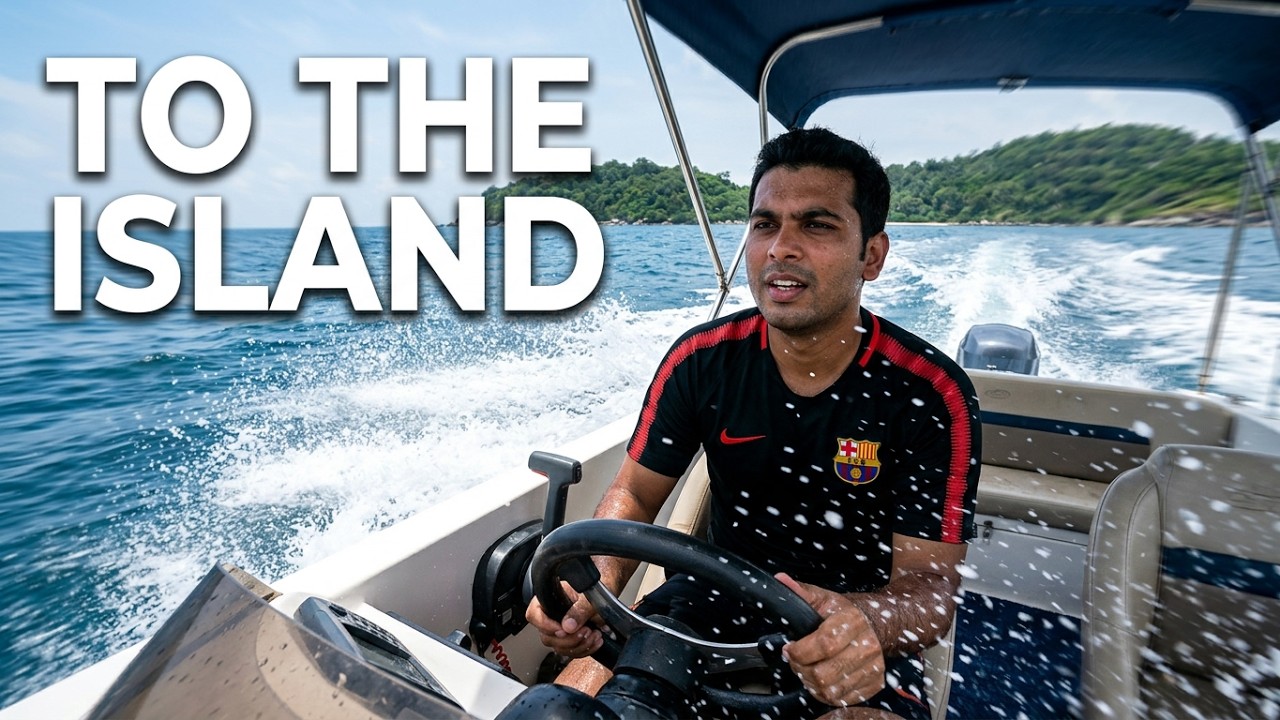
On the Way to Coral Island | Pattaya City Adventure – Part 2
October 27, 2026 — ny_wk
As an Amazon Associate I earn from qualifying purchases.
As an Amazon Associate I earn from qualifying purchases.
🛒 Recommended gear on AmazonDisclosure: some links above are affiliate links — if you buy through them I may earn a small commission at no extra cost to you. Thanks for supporting the channel!
As an Amazon Associate I earn from qualifying purchases.
On the Way to Coral Island | Pattaya City Adventure – Part 2
The speedboat ride from Pattaya to Coral Island (Koh Larn) is one of Southeast Asia's most exhilarating 30-minute sea crossings — a wind-in-your-face, salt-on-your-lips dash across the Gulf of Thailand that transforms a busy beach city into a distant shimmer on the horizon. If you've been wondering whether the journey to Koh Larn is worth it, this guide will give you every detail you need, from boarding the boat at Pattaya Beach to the moment those impossibly clear turquoise waters come into view.
Why the Pattaya to Coral Island Route Is a Must-Do Thailand Experience
Pattaya is famous — sometimes infamous — for its non-stop energy, neon-lit Walking Street, and the relentless buzz of a city that never quite powers down. But just 7.5 kilometres off the coast lies a different world entirely. Koh Larn, which translates loosely as "Coral Island" in the local vernacular, is a 4.5-square-kilometre island in the Gulf of Thailand that belongs to the Chonburi Province, and it has been drawing day-trippers and overnight travellers away from the mainland for decades.
What makes the Pattaya to Coral Island route so compelling isn't just the destination — it's the transition itself. The moment you pull away from Bali Hai Pier and the speedboat's engine roars to life, you feel the psychological shift. The hotel towers shrink. The traffic noise disappears. What replaces it is the deep, rhythmic thrum of the engine, the spray of warm seawater, and an expanding panorama of blue that reminds you exactly why you came to Thailand in the first place.
The crossing takes between 30 and 40 minutes by speedboat — a journey short enough to feel like pure adventure, long enough to appreciate the open water and the views it offers. Along the way, you pass other vessels, catch glimpses of parasailers lifting off from the shoreline, and watch jet skiers carving white lines through the Gulf. It's a live highlight reel of everything Thailand's coastal tourism does brilliantly.
The Speedboat Experience: What the Crossing Actually Feels Like
If you've never taken a speedboat across open water in tropical Southeast Asia, the sensation is genuinely difficult to replicate on land. The boats used on the Pattaya–Koh Larn speedboat route are purpose-built for this crossing — low-slung, powerful, and capable of cutting through moderate swells with confidence. Most carry between 8 and 20 passengers, depending on the operator, and the seating is typically open-air or semi-sheltered with a canopy overhead.
What to Expect on Board
- Departure point: Most speedboats depart from Bali Hai Pier (also known as South Pattaya Pier), which is well-signposted and easy to reach from the main beach strip.
- Speed and sensation: These boats move fast. The bow lifts slightly at full throttle, the engine is loud, and the occasional wave sends a fine mist across the deck. It's invigorating rather than frightening, but passengers who are sensitive to motion or open water should be prepared.
- Views en route: On a clear day — and in Thailand's dry season clarity is extraordinary — you can see the Pattaya skyline receding on one side and the green hills of Koh Larn growing on the other simultaneously. The water colour shifts noticeably as you move further from the coast, deepening from murky jade near the pier to a luminous blue-green in open water.
- Wildlife moments: Keep your eyes on the water. Flying fish occasionally skim the surface alongside speedboats at full pace, and if conditions are calm, you may spot jellyfish pulsing just below the surface.
Capturing the Journey on Camera
The speedboat crossing is one of the most photogenic parts of the entire Coral Island trip, and many travellers underestimate it. The combination of motion blur, sea spray, golden light (especially in the morning), and the dramatic backdrop of open water makes for compelling footage. Secure your phone or camera with a wrist strap — the combination of wind speed and boat movement creates real risk of losing unsecured equipment overboard. A waterproof case is strongly recommended.
Water Sports Action Along the Way: A Preview of Pattaya's Aquatic Playground
One of the unexpected pleasures of the speedboat crossing is that it doubles as a ringside seat for Pattaya's extraordinary water sports scene. The stretch of water between Pattaya Beach and the open Gulf is, particularly during peak season, a theatre of aquatic activity that reflects just how seriously Thailand takes its coastal tourism offering.
Parasailing Over the Gulf of Thailand
Parasailing is one of Pattaya's most iconic experiences, and from the water you get to appreciate it from a completely different angle. Watching parasailers rise from the shoreline — lifted by the combined force of a boat's speed and the parachute canopy — and then arc high above the Gulf gives you a visceral sense of the altitude involved. Those bright canopies against the blue sky are not just decoration; they're a reminder that Pattaya's beach has been a water sports hub since the 1970s, when the area first developed as a resort destination for American servicemen and later international tourists.
Jet Skiing: Speed on the Surface
Jet skis are everywhere on the Pattaya waterfront, and the speedboat ride gives you a front-row view of riders carving arcs through the chop. Jet skiing in Pattaya is enormously popular but comes with its well-documented caveats — rental scams and inflated damage claims have been a persistent issue in the area. If you plan to rent once you're on the water, use only operators with clear written contracts and inspect the machine thoroughly before riding. That said, watching others do it from the relative safety and comfort of your speedboat seat is entirely free of risk and genuinely entertaining.
Banana Boats, Flyboards and More
The broader aquatic entertainment ecosystem around Pattaya extends to banana boat rides (which you'll see towed in long, bouncing processions), flyboards (where pressurised water jets propel riders into the air), and various inflatable towable toys. Koh Larn itself hosts many of these activities at its main beaches, meaning the crossing is essentially your appetiser for a full day of water-based options.
Understanding Koh Larn: The Coral Island That Awaits at the End of the Crossing
It helps, when you're on that boat watching the island grow larger, to understand what exactly you're heading toward. Koh Larn (Coral Island) is a place of genuine natural beauty that has evolved considerably over the decades but still delivers on its core promise: beaches that are measurably prettier and quieter than anything you'll find on the Pattaya shoreline itself.
The Island's Geography and Beaches
Koh Larn has six main beaches, each with its own character. The most popular — and consequently the busiest — is Tawaen Beach on the island's western side, which greets most speedboat arrivals with a wide arc of pale sand, shallow turquoise water, and a dense row of beach restaurants and sun lounger operators. It can feel crowded at peak times (particularly on Thai public holidays), but the sheer scale of the beach absorbs the numbers reasonably well.
- Samae Beach: Slightly quieter, with calmer water ideal for swimming and snorkelling close to shore.
- Nual Beach (Monkey Beach): Named for the resident macaques that inhabit the surrounding jungle; more secluded and accessible mainly by songthaew (shared pickup truck) from the pier.
- Tien Beach: Probably the most photogenic, with rocky outcrops, clear water, and a more relaxed atmosphere than Tawaen.
- Sang Wang Beach and Ting Beach: Small, relatively undeveloped, and genuinely peaceful — best for travellers willing to walk or hire a motorbike to reach them.
The Coral Reef Situation
The name "Coral Island" carries a promise that deserves honest examination. Historically, Koh Larn had significant coral reef systems in its surrounding waters. Decades of heavy tourism pressure, boat anchoring, and water pollution have degraded much of the original coral, and snorkelling directly off the main beaches today yields modest results compared to what's possible further south in Thailand. However, certain spots — particularly around the island's less-visited northern and eastern headlands — still support living coral and attract respectable marine life. Going with a local dive or snorkel operator who knows the active reef areas will dramatically improve the experience.
Plan Your Visit: Practical Guide to the Pattaya–Coral Island Speedboat Trip
Getting from Pattaya to Koh Larn is straightforward, but the details matter — especially for first-time visitors who haven't navigated Thai pier culture before. Here's everything you need to know to make the crossing smoothly and get the most out of your time on the island.
How to Get to Bali Hai Pier from Pattaya City
Bali Hai Pier sits at the southern end of Pattaya Beach Road, near the Pattaya Park area. From central Pattaya, it's accessible by baht bus (songthaew) for a nominal fare — typically 10–20 THB per person if you're riding a shared route, or negotiated as a private hire. Grab motorcycles (motosai) are also widely available. Walking from Beach Road takes about 20–30 minutes if you're in the northern or central beach area.
Speedboat vs. Ferry: Choosing Your Crossing
- Speedboat: 30–40 minutes, higher cost (typically 600–1,500 THB per person return depending on negotiation and whether it's a shared or chartered boat), thrilling experience, flexible departure times. Best for day trips where maximising island time matters.
- Public ferry (slow boat): Approximately 45–60 minutes, very affordable (around 30–50 THB one way), departs on a schedule rather than on demand, significantly less dramatic but perfectly adequate for budget travellers. Operated by the Koh Larn Municipality and departs from Bali Hai Pier.
Best Time to Make the Crossing
The Gulf of Thailand's dry season — roughly November through April — offers the most reliable conditions for the crossing, with calm seas, clear visibility, and minimal risk of unexpected rain. The water is at its clearest and the boat ride is at its most comfortable. May through October is the wet/monsoon season; crossings still happen, but rough seas are more common and some days see services suspended for safety reasons. Always check weather conditions the evening before if you're travelling in the shoulder or wet season.
Practical Tips for the Day
- Arrive early: Speedboat operators tend to fill boats before departing, so arriving at Bali Hai Pier by 8:00–9:00 AM gives you first pick of operators and more of the island day to enjoy.
- Negotiate return timing: Agree on your return boat time before you leave — most speedboat operators will specify a pickup time on the island. Last returns are typically around 5:00–6:00 PM.
- Bring cash: ATMs exist on Koh Larn but are limited. Most beach vendors and activity operators work on a cash-only basis.
- Sun protection is non-negotiable: The combination of direct equatorial sun, reflective water, and wind (which masks how hot it actually is) makes sunburn a genuine risk. High-SPF reef-safe sunscreen, a hat, and UV-protective rash guards are all worth the luggage space.
- Stay hydrated: Sealed bottled water is available on the island, but it's cheaper and more convenient to bring your own supply from the mainland.
- Seasickness preparation: If you're prone to motion sickness, take appropriate medication at least 30 minutes before departure. The speedboat crossing in choppy conditions can be bumpy enough to affect sensitive travellers.
Key Takeaways
- The speedboat ride from Pattaya to Koh Larn takes 30–40 minutes and is an adventure in itself — not just a means of transport but one of the highlights of the entire Coral Island experience.
- Bali Hai Pier is your departure point, located at the southern end of Pattaya Beach Road and easily reachable by baht bus or motorbike taxi from central Pattaya.
- Koh Larn has six beaches with varying crowd levels and character — Tawaen is the most accessible, while Tien and Nual offer more seclusion for travellers willing to explore further.
- Water sports action — including parasailing, jet skiing, and banana boats — is visible both along the Pattaya shoreline and at Koh Larn's main beaches, making this a superb destination for thrill-seekers and beach relaxers alike.
- Travel during the dry season (November–April) for the calmest seas, clearest water, and the best overall experience of the crossing and the island.
Frequently Asked Questions
How long does the speedboat ride from Pattaya to Coral Island take?
The speedboat crossing from Pattaya (Bali Hai Pier) to Koh Larn (Coral Island) takes approximately 30 to 40 minutes depending on sea conditions and the specific vessel used. Public ferries take longer — around 45 to 60 minutes — but are significantly cheaper.
Is Coral Island (Koh Larn) worth visiting from Pattaya?
Yes — Koh Larn is widely considered one of the best day trips from Pattaya. Its beaches are cleaner and less crowded than Pattaya's main shoreline, the water is noticeably clearer, and the island offers a genuine tropical beach experience within easy reach of the city. It is most enjoyable when visited on weekdays outside Thai public holidays to avoid peak crowds.
What water sports can you do on the way to and at Coral Island?
On the Pattaya waterfront and during the crossing, you'll see parasailing, jet skiing, and banana boat riding in action. At Koh Larn itself, these activities plus snorkelling, scuba diving, flyboarding, and various inflatable towable options