
17,694 Canada PR Invites in October 2026 — But 57% Went to French Alone
November 12, 2026 — ny_wk
▶ 17,694 Canada PR Invites in October 2026 — But 57% Went to French Alone | @explorenystream
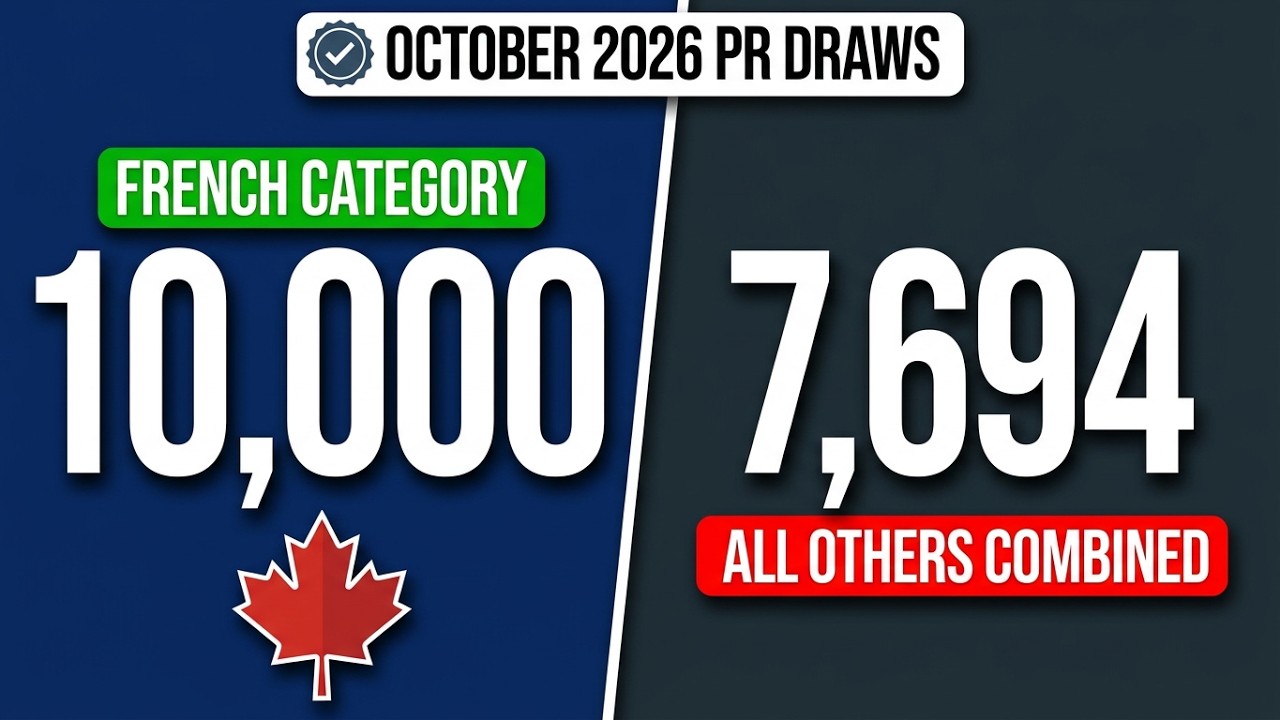
October 2026 saw a significant milestone in Canadian immigration, with 17,694 Canada PR invites issued through Express Entry. However, a closer look reveals a striking trend: 57% of these invites went exclusively to French-speaking candidates, highlighting Canada's strategic push for Francophone immigration outside Quebec. This targeted approach underscores a critical shift in Canada's immigration landscape, aimed at strengthening linguistic diversity and addressing labor market needs in official language minority communities.
For aspiring immigrants, understanding this dynamic is paramount. The Express Entry system continues to be the primary pathway for economic immigration, but the recent draw results emphasize the increasingly vital role of French language proficiency. This article delves into the implications of these draws, explores the reasons behind Canada's focus on Francophone newcomers, and provides practical insights for those hoping to secure their own piece of the Canadian dream.
Understanding the October 2026 Express Entry Draws: A Deep Dive
The announcement of 17,694 Canada PR invites in October 2026 sent ripples through the global immigration community. These numbers represent a robust commitment from Immigration, Refugees and Citizenship Canada (IRCC) to welcome a substantial number of permanent residents, contributing to the nation's economic growth and demographic objectives. Express Entry, Canada's flagship immigration application management system, plays a central role in achieving these targets, selecting skilled workers based on factors like age, education, work experience, and language proficiency.
The Express Entry System: A Quick Refresher
Express Entry manages applications for three federal economic immigration programs:
- Federal Skilled Worker Program (FSWP): For skilled workers with foreign work experience who want to immigrate to Canada permanently.
- Federal Skilled Trades Program (FSTP): For skilled workers qualified in a skilled trade.
- Canadian Experience Class (CEC): For skilled workers who have Canadian work experience.
Candidates create an online profile, receive a Comprehensive Ranking System (CRS) score, and enter a pool. IRCC then conducts draws, inviting candidates with scores above a certain threshold to apply for permanent residency. The October 2026 draws, however, revealed a significant departure from typical all-program draws, showcasing a highly targeted approach.
The Significance of Category-Based Draws
The fact that 57% of the 17,694 invites went to French-speaking candidates indicates a strong reliance on category-based selection draws. Introduced to address specific economic goals and support official language minority communities, these draws prioritize candidates with particular skills, work experience, or language abilities. For October 2026, the emphasis was unequivocally on French proficiency. This isn't merely about meeting quotas; it's a strategic investment in Canada's linguistic fabric and economic future, particularly in provinces outside Quebec where Francophone populations are smaller.
Such targeted draws demonstrate IRCC's flexibility and responsiveness to national needs. While general draws continue, the increasing frequency and size of category-based draws for French speakers signal a long-term policy direction. This means that for many prospective immigrants, demonstrating strong French language skills is no longer just an advantage—it's fast becoming a critical differentiator.
Why the French Focus? Canada's Strategic Immigration Imperatives
The statistic that 57% of Canada PR invites in October 2026 went to French alone isn't an arbitrary figure; it's a direct outcome of Canada's long-standing commitment to promoting its two official languages, English and French. This commitment is enshrined in the Official Languages Act and is a cornerstone of Canadian identity. Beyond cultural preservation, there are compelling demographic and economic reasons driving this intensified focus on Francophone immigration.
Strengthening Francophone Communities Outside Quebec
Canada is a bilingual country, but French-speaking communities outside Quebec often face demographic challenges. Immigration is seen as a vital tool to sustain and grow these communities, ensuring their vitality and preventing assimilation. IRCC has set ambitious targets for Francophone immigration, aiming to increase the proportion of French-speaking immigrants settling outside Quebec to 4.4% by 2023 and working towards 4.9% by 2027-2028. The October 2026 results show a clear effort to accelerate towards and even surpass these targets, demonstrating a proactive approach to supporting official language minority communities.
These newcomers contribute not only to the linguistic diversity but also to the economic and social fabric of regions like New Brunswick, Ontario, Manitoba, and others. They fill labor market gaps, start businesses, and enrich local culture, providing a much-needed boost to regions that might otherwise see their Francophone populations decline.
Addressing Labor Market Needs with Bilingual Talent
Beyond linguistic considerations, there's a practical economic angle. Many sectors across Canada require bilingual talent, from healthcare and education to tourism and federal government services. Francophone immigrants often possess valuable skills and educational backgrounds that align with Canada's labor market demands. By prioritizing French speakers, Canada gains access to a pool of highly qualified individuals who can smoothly integrate into various professional environments and serve both English and French-speaking clientele.
Furthermore, studies have shown that immigrants, particularly those with strong language skills, tend to have higher employment rates and contribute significantly to Canada's GDP. The focus on French-speaking immigrants is therefore not just a social policy but a sound economic strategy, ensuring Canada attracts the best and brightest to drive its economy forward.
Government Policy and Legislative Support
The shift towards prioritizing Francophone immigration is also underpinned by robust government policy and legislative frameworks. The Action Plan for Official Languages and various immigration policies explicitly articulate the goal of increasing Francophone immigration outside Quebec. This commitment translates into specific program enhancements, targeted draws, and dedicated resources to support French-speaking newcomers. The results of the October 2026 draws are a tangible manifestation of these policy directives being put into action.
Prospective immigrants should understand that this is not a temporary trend but a foundational element of Canada's long-term immigration strategy. Learning French, or improving existing French skills, is increasingly becoming a strategic move for anyone considering Canadian permanent residency.
working through the Express Entry Path: Strategies for Aspiring Immigrants
Given that 17,694 Canada PR invites were issued in October 2026, with a dominant share going to French speakers, future applicants must adapt their strategies. Success in Express Entry is about maximizing your Comprehensive Ranking System (CRS) score and aligning with Canada's immigration priorities. For many, this now includes a strong emphasis on French language proficiency.
Boosting Your CRS Score with French Language Proficiency
For candidates applying through Express Entry, French language skills offer a significant advantage in several ways:
- Additional Points for Bilingualism: Candidates with strong French language skills (CLB 7 or higher in all four abilities on the NCLC) and English language skills (CLB 5 or higher) receive additional points under the CRS. This is separate from the points awarded for each official language.
- Category-Based Draws: As seen in October 2026, being eligible for French-speaking category-based draws can drastically lower the CRS score required for an Invitation to Apply (ITA). These draws often have significantly lower cut-offs than all-program draws, making PR accessible to a broader range of candidates.
- Provincial Nominee Programs (PNPs): Many provinces have specific PNP streams targeting French-speaking skilled workers. A provincial nomination adds an incredible 600 points to your CRS score, virtually guaranteeing an ITA. Provinces like Ontario, New Brunswick, and Manitoba actively seek Francophone immigrants.
For those serious about immigrating to Canada, investing time and resources into learning or perfecting French is no longer optional for maximizing your chances; it’s a strategic imperative. Consider taking French language tests like the TEF (Test d'évaluation de français) or TCF (Test de connaissance du français) to officially certify your proficiency.
Beyond French: A Holistic Approach to Express Entry
While French is a powerful accelerator, a well-rounded Express Entry profile remains crucial. Here's a reminder of other key factors:
- Education: Higher education degrees, especially Canadian ones, yield more points. Obtaining an Educational Credential Assessment (ECA) for foreign degrees is mandatory.
- Work Experience: Skilled work experience, particularly Canadian work experience, adds significant points. Ensure your work experience is classified under NOC (National Occupational Classification) TEER categories 0, 1, 2, or 3.
- Age: Younger applicants (typically 20-29) receive the maximum points for age.
- Spouse/Common-Law Partner: Your partner's language skills, education, and Canadian work experience can also contribute to your overall CRS score.
- Provincial Nominee Programs (PNPs): Actively research and apply to provincial nominee programs. Many PNPs align with federal Express Entry and can lead to a nomination, adding 600 CRS points.
- Job Offer: A valid job offer supported by a Labour Market Impact Assessment (LMIA) or an LMIA-exempt offer under certain conditions can provide additional points.
Remember to keep your Express Entry profile updated with any new qualifications, work experience, or language test results. The immigration landscape is dynamic, and staying informed is key.
The Future of Canadian Immigration: What October 2026 Tells Us
The October 2026 Express Entry draws, particularly the overwhelming preference for French-speaking candidates, provide a clear roadmap for the future direction of Canadian immigration. This trend is unlikely to abate and will continue to shape how Canada selects its permanent residents for years to come.
Continued Emphasis on Francophone Immigration
Canada's demographic and linguistic objectives mean that category-based draws for French speakers will remain a prominent feature of the Express Entry system. As IRCC strives to meet and exceed its Francophone immigration targets outside Quebec, we can expect frequent and substantial draws targeting this group. This solidifies French language proficiency as one of the most reliable pathways to Canadian permanent residency for many skilled workers.
This commitment also extends to settlement services. French-speaking newcomers often have access to a network of Francophone organizations that assist with integration, employment, and community building, further demonstrating Canada's dedication to their successful transition.
Adaptability and Strategic Planning for Applicants
For individuals planning to immigrate to Canada, the message from October 2026 is unambiguous: adaptability and strategic planning are essential. If you are proficient in French, leverage it. If not, consider making it a priority. This shift underscores that while general eligibility criteria remain, Canada is increasingly using targeted draws to meet specific national needs.
Applicants should regularly monitor IRCC announcements, Express Entry draw results, and provincial nominee program updates. Information is power in the competitive world of immigration. Staying abreast of the latest policy changes and draw patterns will allow you to adjust your strategy and maximize your chances of success.
Key Takeaways
- 17,694 Canada PR invites were issued in October 2026, marking a significant Express Entry draw.
- A remarkable 57% of these invites went to French-speaking candidates, highlighting Canada's strong push for Francophone immigration.
- This focus is strategic, aimed at strengthening Francophone communities outside Quebec and addressing bilingual labor market needs.
- French language proficiency (CLB 7+) offers substantial CRS points and access to exclusive category-based draws, significantly lowering the required CRS score.
- Aspiring immigrants should consider prioritizing French language acquisition and exploring Provincial Nominee Programs for enhanced PR chances.
Frequently Asked Questions
What does "17,694 Canada PR Invites in October 2026" mean?
This refers to the total number of Invitations to Apply (ITAs) for permanent residency issued by Immigration, Refugees and Citizenship Canada (IRCC) through the Express Entry system during October 2026. These ITAs allow candidates to submit a full application for Canadian permanent residence.
Why did 57% of the invites go to French-speaking candidates?
Canada has a long-standing commitment to promoting its two official languages and supporting Francophone communities outside Quebec. The high percentage reflects a strategic effort by IRCC to meet its Francophone immigration targets, strengthen these communities, and address labor market demands for bilingual professionals across the country through category-based Express Entry draws.
How can I improve my chances of receiving a Canada PR invite in light of these trends?
To improve your chances, focus on maximizing your Comprehensive Ranking System (CRS) score. This includes improving your French language proficiency (aim for CLB 7 or higher), gaining skilled work experience, pursuing higher education, and exploring provincial nominee programs. Actively researching and applying for French-speaking specific streams can significantly boost your prospects.
Is learning French now essential for Canadian immigration?
While not strictly "essential" for all Express Entry streams, the October 2026 results clearly show that French proficiency provides a significant advantage. It can open doors to category-based draws with lower CRS cut-offs and offer additional points, making it a highly strategic asset for anyone serious about immigrating to Canada, especially outside Quebec.
For a detailed visual breakdown and further insights into these significant Express Entry draws, be sure to watch the full video on the @explorenystream channel. Don't forget to subscribe for more expert analysis and updates on Canadian immigration!